15 Cute Pipe Cleaner Ideas for Kids School Projects
Pipe cleaners are the perfect craft supply for school projects—affordable, safe, colorful, and endlessly versatile for creating impressive presentations without requiring advanced skills or expensive materials. Teachers and parents love them because they’re mess-free, easy to transport, and appropriate for all grade levels from preschool through elementary school. Kids love them because they’re forgiving to work with, come in every color imaginable, and transform quickly into recognizable shapes that make their projects stand out. These 15 cute pipe cleaner ideas are specifically designed for school projects, helping students create eye-catching displays, hands-on learning tools, and memorable presentations that teachers will appreciate and classmates will admire while reinforcing educational concepts across subjects.
1. Solar System Model
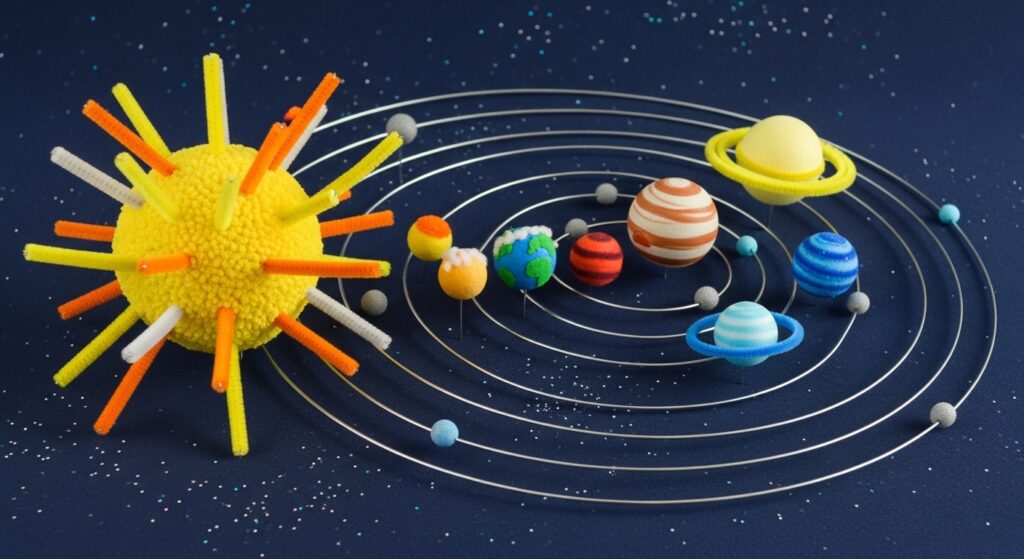
Create a dimensional solar system by bending black pipe cleaners into circular orbits of different sizes, attaching small painted foam balls as planets in their correct order from the sun. Use yellow pipe cleaners radiating from a larger ball to represent the sun’s rays. This hands-on astronomy project helps students remember planet order while creating an impressive 3D display that demonstrates understanding of our solar system’s structure and scale.
2. DNA Double Helix
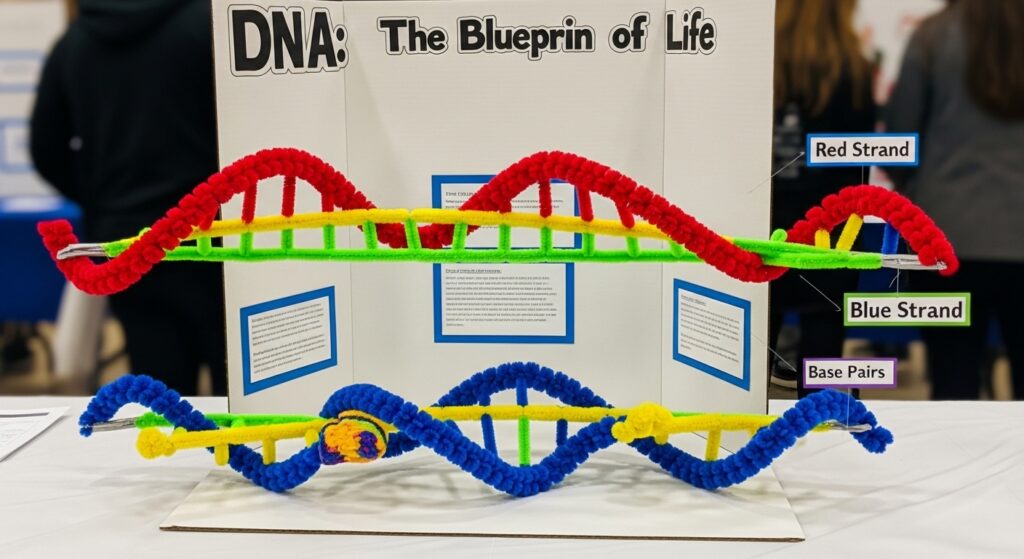
Twist two pipe cleaners together in a spiral to form the DNA backbone, then connect them with shorter pipe cleaner segments representing base pairs. Use different colors for the four bases (adenine, thymine, guanine, cytosine) to show accurate pairing. This biology project makes abstract genetics concepts tangible and visual, perfect for science fair presentations or classroom demonstrations about heredity and molecular biology.
3. Butterfly Life Cycle Display
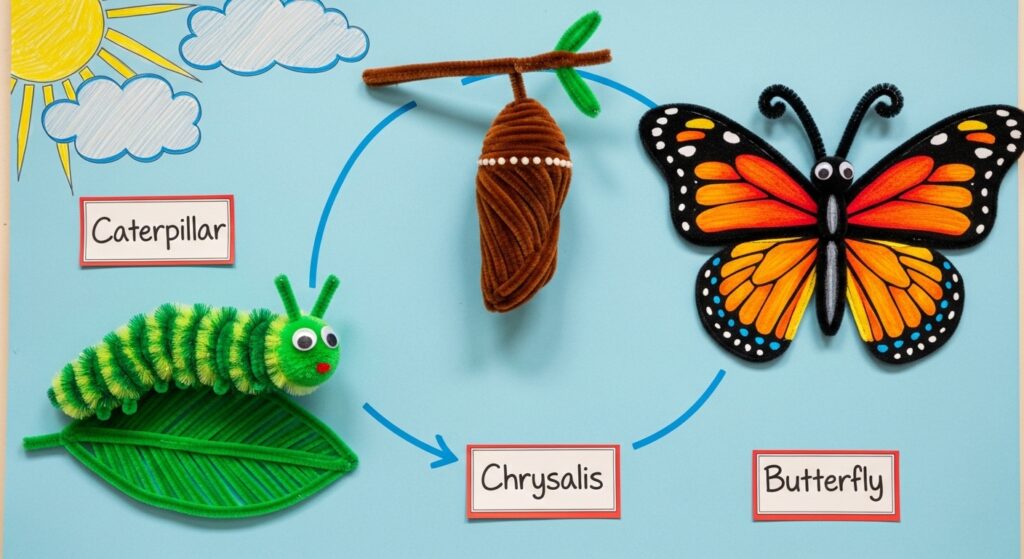
Demonstrate metamorphosis by creating each life cycle stage from pipe cleaners—a coiled caterpillar, wrapped chrysalis, and butterfly with looped wings. Mount all stages on a display board with arrows showing the progression and written explanations. This project combines art with science education, teaching insect development while creating a colorful, three-dimensional visual aid that makes the concept memorable and engaging for young learners.
4. Skeleton Bones Model

Shape white pipe cleaners into a basic skeleton showing the skull, spine, ribcage, and major limb bones. Mount on black construction paper for dramatic contrast. This anatomy project teaches bone structure and body systems while being age-appropriate for elementary students. Add labels identifying major bones like the skull, femur, and ribs to enhance educational value and demonstrate understanding of human anatomy.
5. Plant Parts Diagram
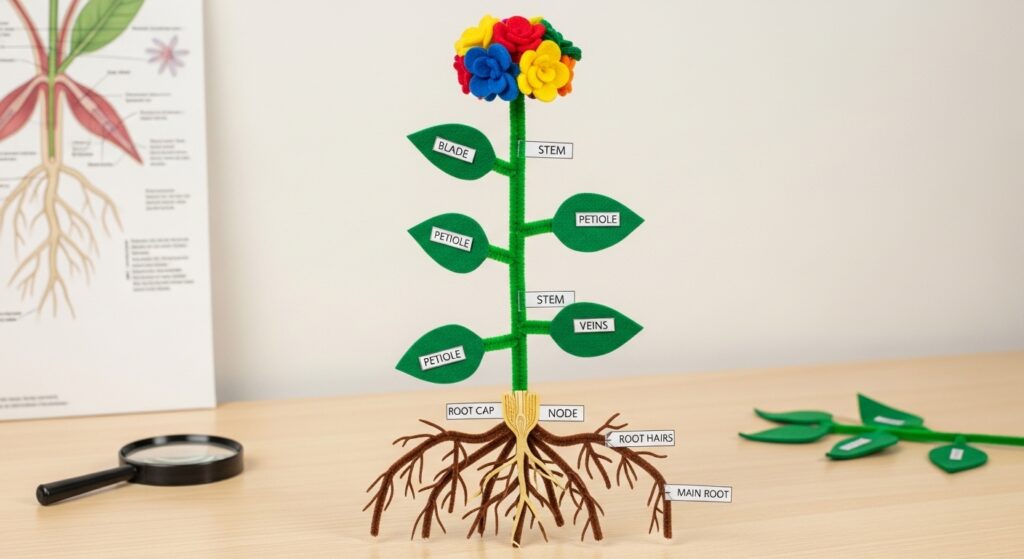
Create a complete plant showing roots, stem, leaves, and flower using appropriately colored pipe cleaners. Brown pipe cleaners form spreading roots, green creates the stem and leaves, and bright colors make the flower petals. This botany project teaches plant anatomy and functions, perfect for science units on photosynthesis, plant life cycles, or garden studies while creating an attractive visual representation.
6. Historical Figure Portrait
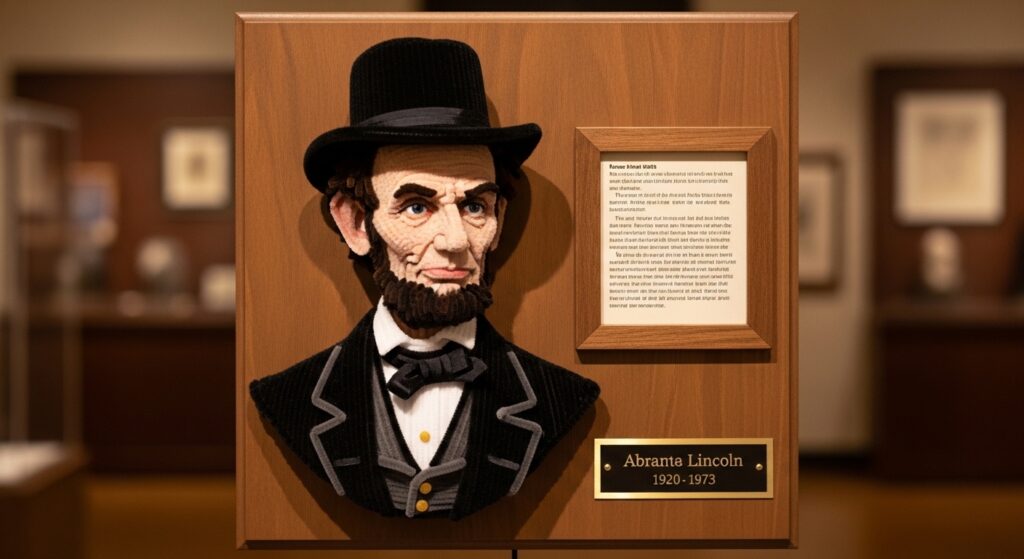
Form a pipe cleaner portrait of a historical figure being studied—Abraham Lincoln’s distinctive profile and top hat, George Washington’s colonial wig, or Frida Kahlo’s flower crown. This creative history project combines research with art, demonstrating knowledge of the person’s appearance and significance. Add a written biography alongside the portrait for a complete presentation that showcases both artistic and academic understanding.
7. Food Pyramid Display
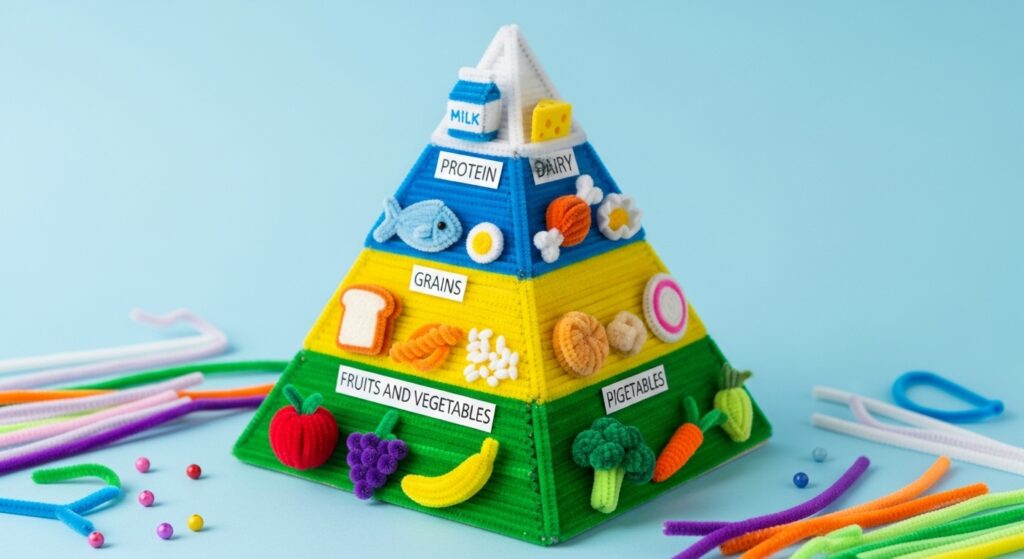
Construct a food pyramid using pipe cleaners as the frame, dividing it into sections representing different food groups. Create tiny pipe cleaner foods for each section—fruits, vegetables, grains, proteins, and dairy. This health education project teaches nutrition concepts while developing fine motor skills. Students can explain serving recommendations and healthy eating habits while their colorful display makes the information visually accessible and memorable.
8. Weather Symbols Chart
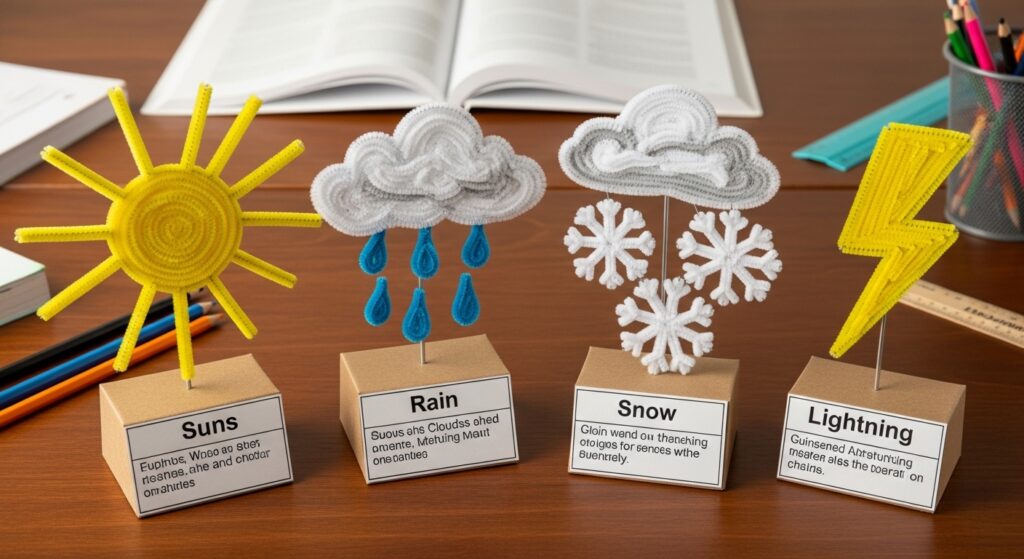
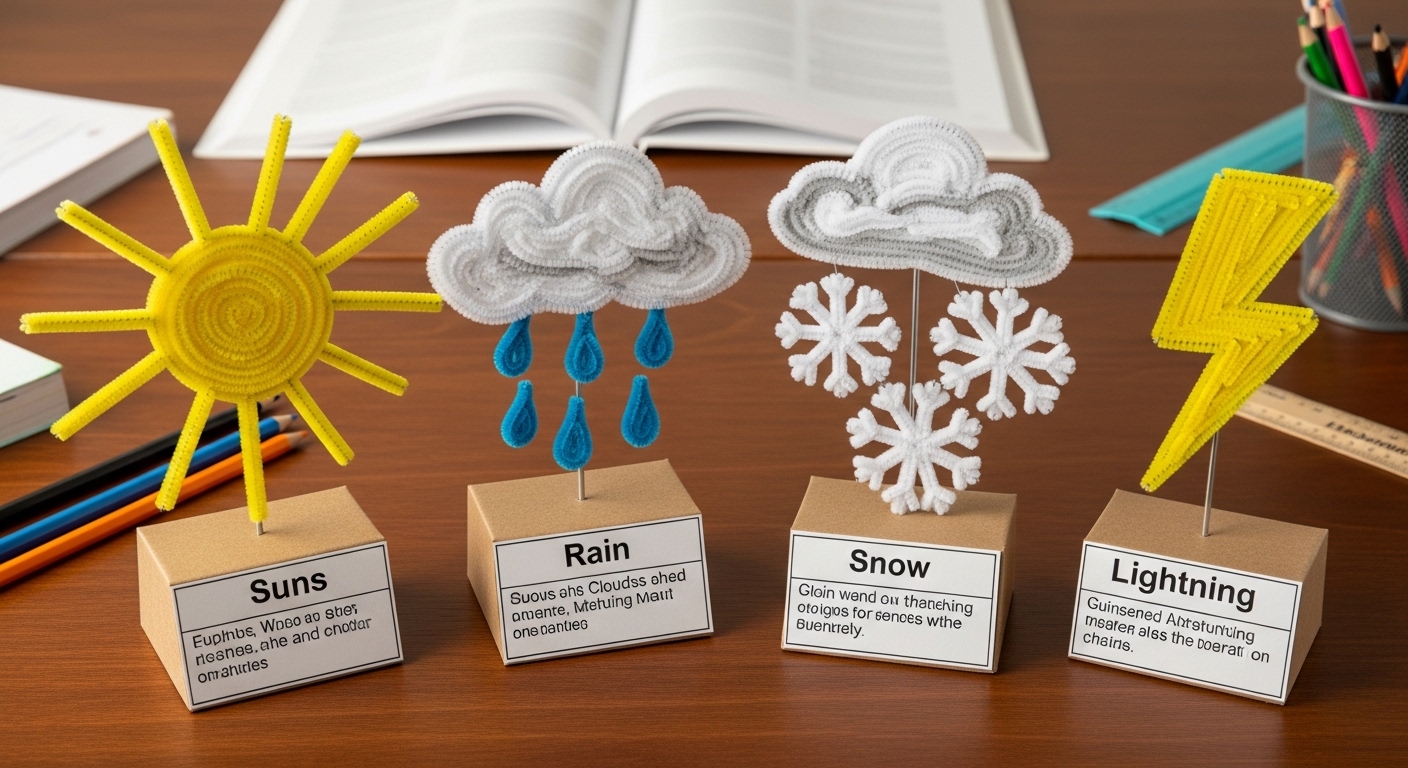
Make weather symbols from pipe cleaners—a yellow sun with rays, white/gray clouds, blue raindrops, white snowflakes, and yellow lightning bolts. Create a chart showing different weather conditions with the corresponding symbols. This meteorology project works well for science units on weather, climate, or seasons, teaching students to recognize and interpret weather symbols while creating a useful classroom reference tool.
9. Geometric Shapes Learning Tool
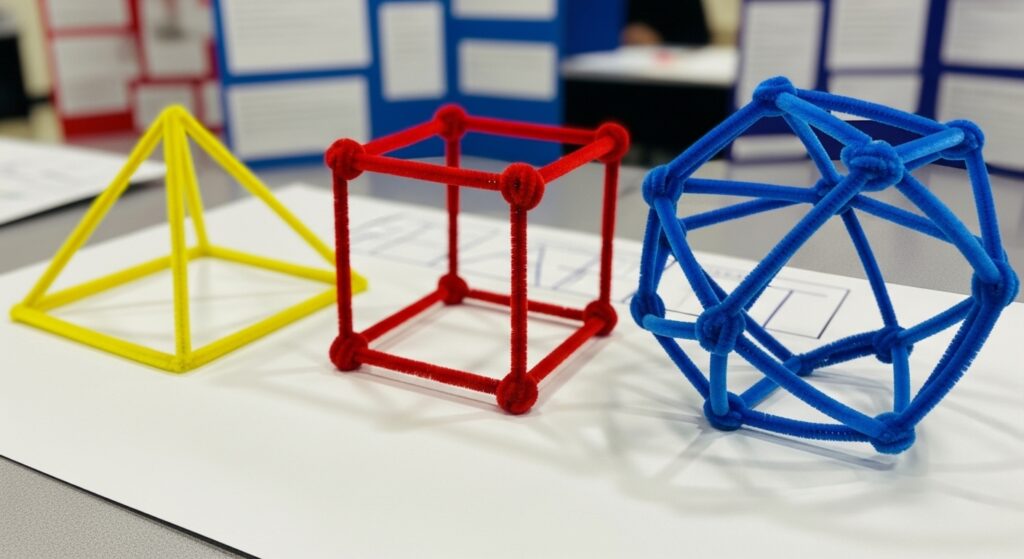
Construct three-dimensional geometric shapes by connecting pipe cleaners at vertices—cubes, pyramids, prisms, and other polyhedrons. This hands-on math project teaches geometry concepts including vertices, edges, and faces. Students can count and label these features, understanding shape properties through tactile learning. The colorful models make abstract mathematical concepts concrete and engaging, perfect for presentations or classroom demonstrations of geometric principles.
10. Book Character Creation
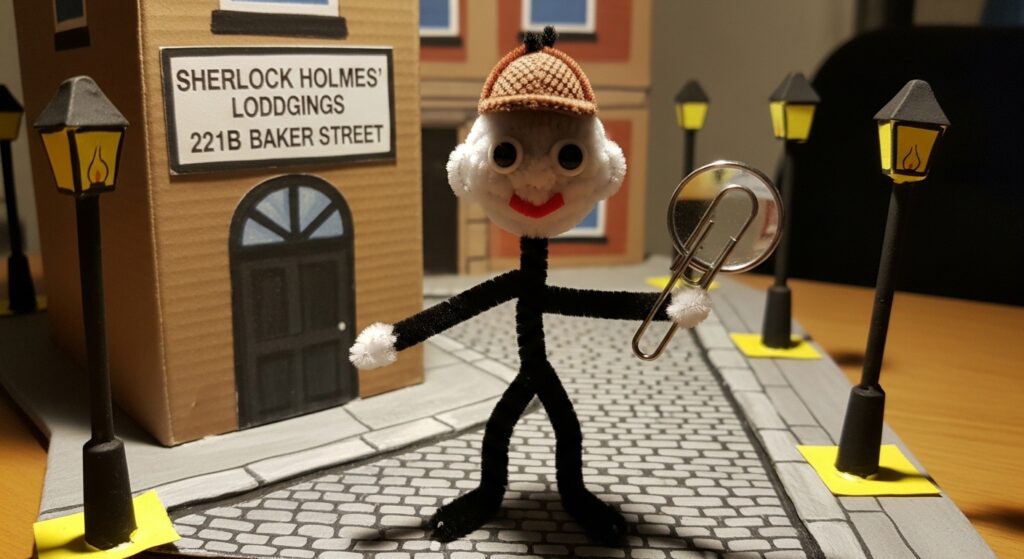
Create a pipe cleaner figure representing a character from assigned reading—Harry Potter with glasses and wand, Charlotte the spider with eight legs, or the Cat in the Hat with his distinctive hat. Include scene elements or props from the story. This literature project demonstrates reading comprehension and character analysis while allowing creative interpretation, perfect for book reports or reading response activities that combine analysis with artistic expression.
11. Insect Collection Display
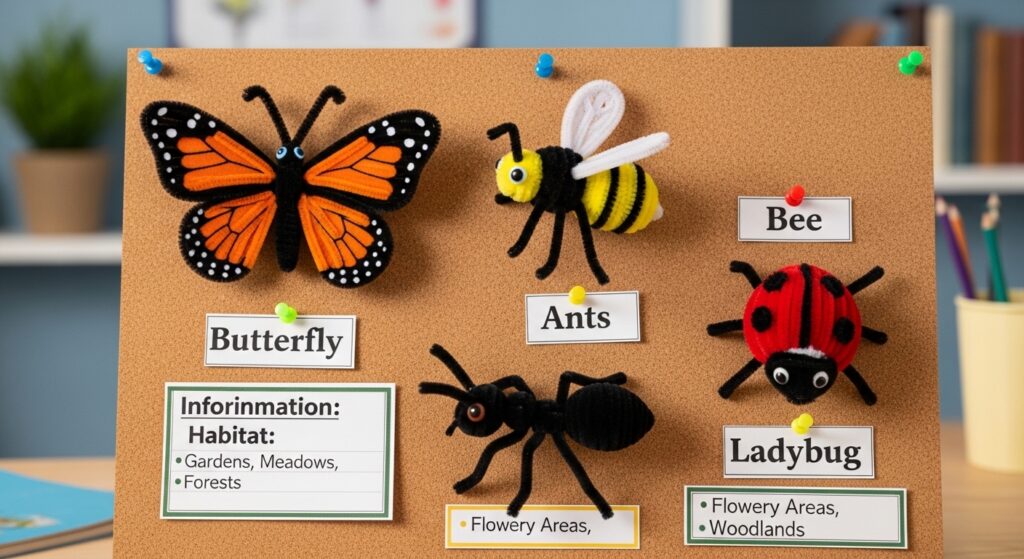
Craft multiple insects showing distinctive features—butterflies with symmetrical wings, bees with stripes, ants with three body segments, and ladybugs with spots. Display with labels identifying each insect and facts about their characteristics or habitats. This biology project teaches insect anatomy, classification, and diversity while creating an engaging alternative to collecting real insects, making science accessible and cruelty-free.
12. Math Operations Visual
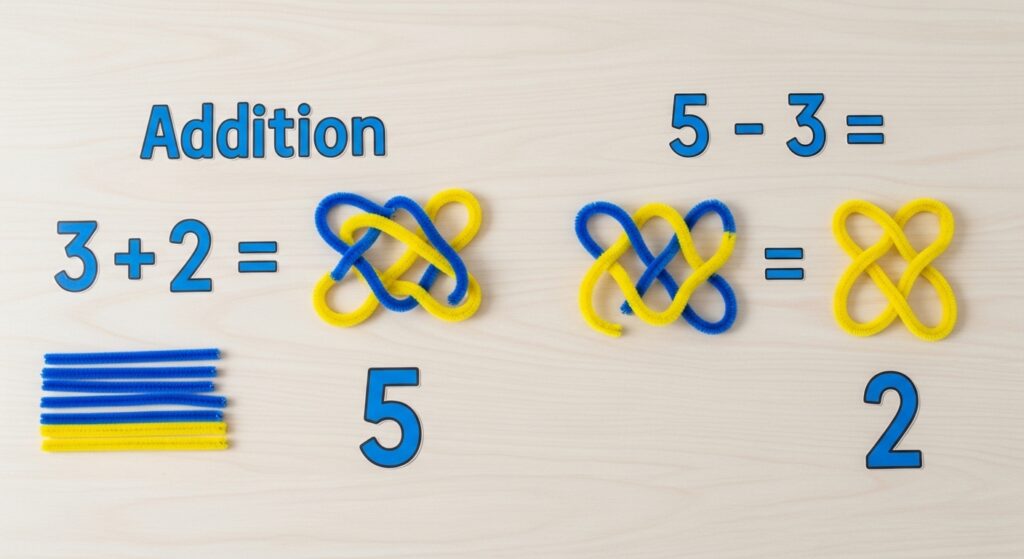
Use different colored pipe cleaners as counting manipulatives to demonstrate addition, subtraction, or multiplication problems visually. Create groups showing equations like 3+2=5 with three blue and two red pipe cleaners equaling five total. This math project makes abstract operations concrete and visual, perfect for demonstrating understanding of basic arithmetic or explaining problem-solving strategies to classmates through hands-on visual representations.
13. American Flag or Country Flag
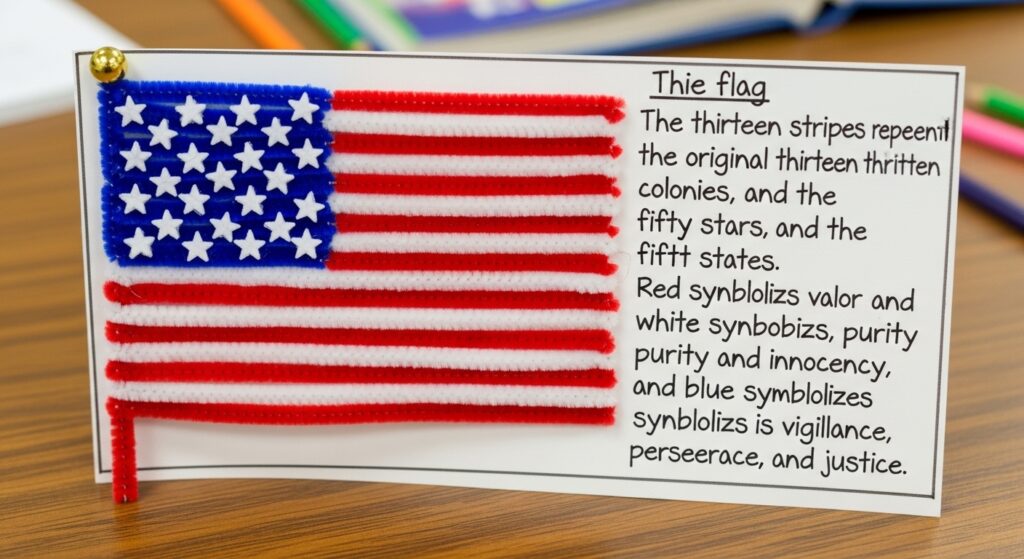
Construct a flag using red, white, and blue pipe cleaners for the American flag, or colors representing another country being studied. Arrange stripes horizontally and create stars in the blue field. This social studies project teaches national symbols, geography, and cultural awareness. Include written information about flag symbolism and history, making it appropriate for patriotic holidays or international culture studies.
14. Water Cycle Diagram
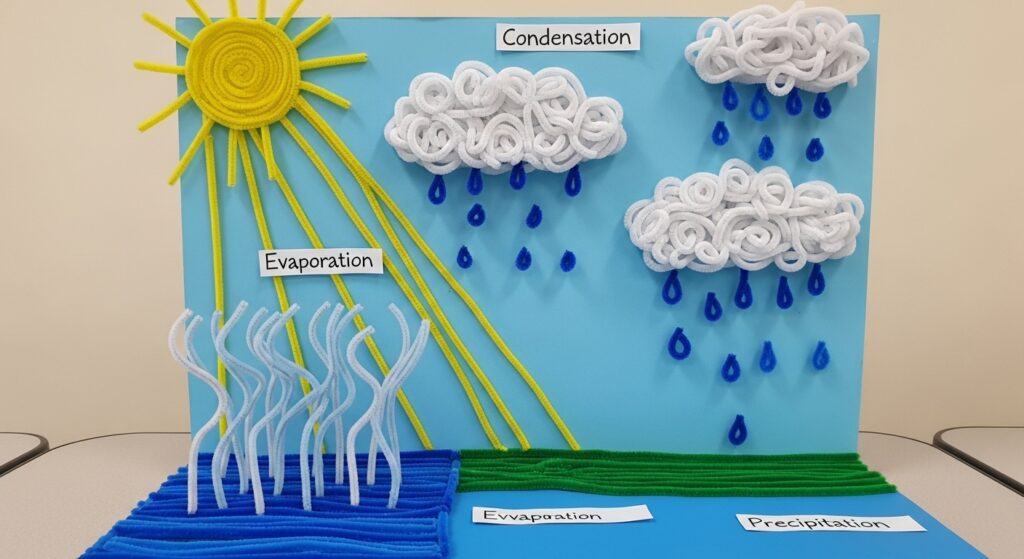
Create a water cycle model using blue pipe cleaners for water droplets, white for clouds, yellow for the sun, and green for ground/plants. Show arrows indicating evaporation, condensation, and precipitation. This earth science project teaches the water cycle stages through three-dimensional representation. Add labels and explanations for each stage, demonstrating understanding of this essential environmental process through creative visual display.
15. Simple Circuits Education Model
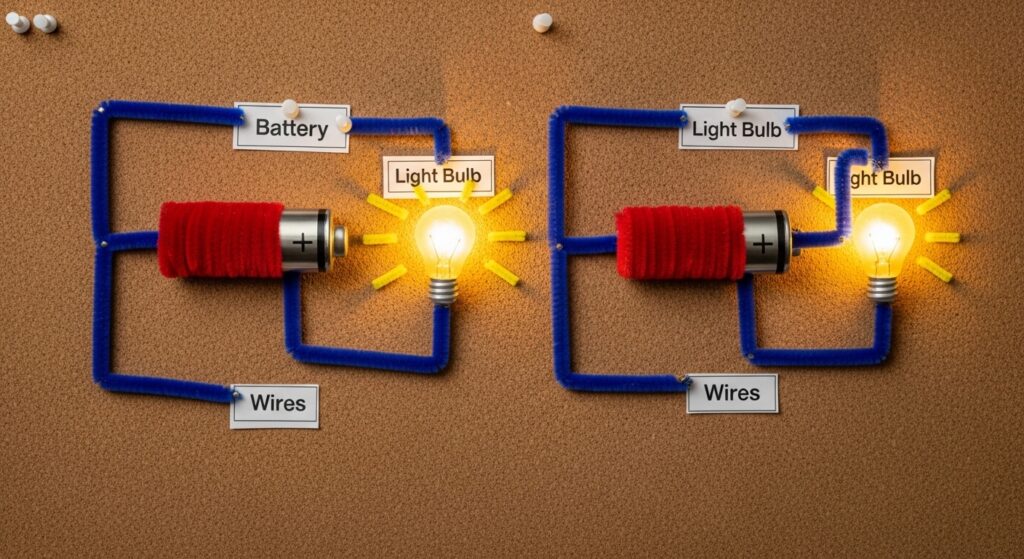
Demonstrate electrical circuits using pipe cleaners to represent wires connecting a battery to a light bulb (represented by a small ball or drawing). Show both complete and incomplete circuits to teach conductivity concepts. While the pipe cleaners won’t conduct actual electricity, they create a safe visual model teaching circuit basics. This STEM project introduces electricity concepts appropriate for elementary-level physical science units on energy and electricity.
Conclusion
These 15 pipe cleaner ideas transform simple craft supplies into powerful educational tools that make school projects more engaging, memorable, and successful. From science models demonstrating complex concepts like DNA structure and the solar system to creative representations of book characters and historical figures, pipe cleaners offer students the perfect medium for showing what they’ve learned across all subjects. The tactile, three-dimensional quality helps kinesthetic learners grasp abstract concepts while the colorful, eye-catching results make presentations stand out during class sharing or at science fairs.
The beauty of using pipe cleaners for school projects lies in their accessibility and forgiving nature—mistakes are easily corrected, designs can be adjusted until perfect, and the final results look polished and professional despite being made by young hands. Parents appreciate the minimal cost and mess, teachers value the educational reinforcement and creativity, and students gain confidence from successfully creating impressive displays that demonstrate their knowledge. Whether illustrating scientific concepts, bringing literature to life, or making math visual, pipe cleaners prove that the most effective learning tools are often the simplest ones. These projects not only help students earn good grades but also create positive associations with learning, making education hands-on, creative, and genuinely fun.