19 Wood Wall Design Ideas to Transform Your Space
Wood walls possess a timeless beauty and organic warmth that instantly transforms any room from ordinary to extraordinary. Whether you’re drawn to rustic reclaimed barn wood, sleek modern planks, or intricate geometric patterns, wood wall treatments add architectural interest, natural texture, and undeniable character that painted drywall simply cannot match. The inherent versatility of wood allows it to work beautifully across virtually any design style—from industrial lofts to cozy farmhouses, minimalist modern spaces to traditional homes. These 19 stunning wood wall design ideas will inspire you to embrace this natural material and create a focal point that adds depth, warmth, and sophisticated style to your space while celebrating the authentic beauty of real wood grain and organic texture.
1. Horizontal Shiplap Accent Wall
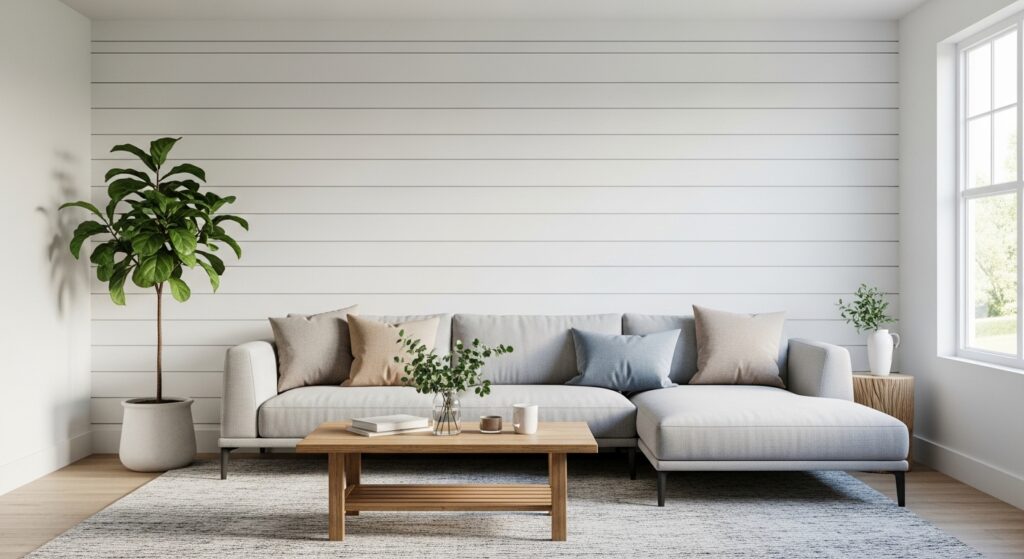
Horizontal shiplap creates clean, linear texture that feels both contemporary and timelessly classic throughout any space. Install uniform wood planks horizontally across your accent wall, leaving small characteristic gaps between boards for signature shiplap detailing. Paint the shiplap crisp white for modern farmhouse appeal, or maintain natural wood tones for rustic warmth and organic character. The horizontal lines make walls appear wider and rooms feel more spacious and open. This versatile approach works beautifully behind beds as headboard alternatives, in living rooms as focal walls, or throughout entire rooms for cohesive architectural character.
Shiplap’s enduring popularity stems from its ability to add architectural interest without overwhelming spaces or competing with furniture and décor. The subtle shadow lines between boards create gentle dimension that catches light beautifully throughout the day. Real wood shiplap provides authentic texture and natural beauty, though MDF alternatives offer budget-friendly options with similar visual impact. Installation is manageable for DIYers with basic carpentry skills, or hire professionals for perfectly aligned, seamless results. This classic treatment elevates spaces from builder-grade basic to custom-crafted sophisticated with relatively minimal investment and maximum transformative visual impact.
2. Vertical Wood Plank Feature Wall
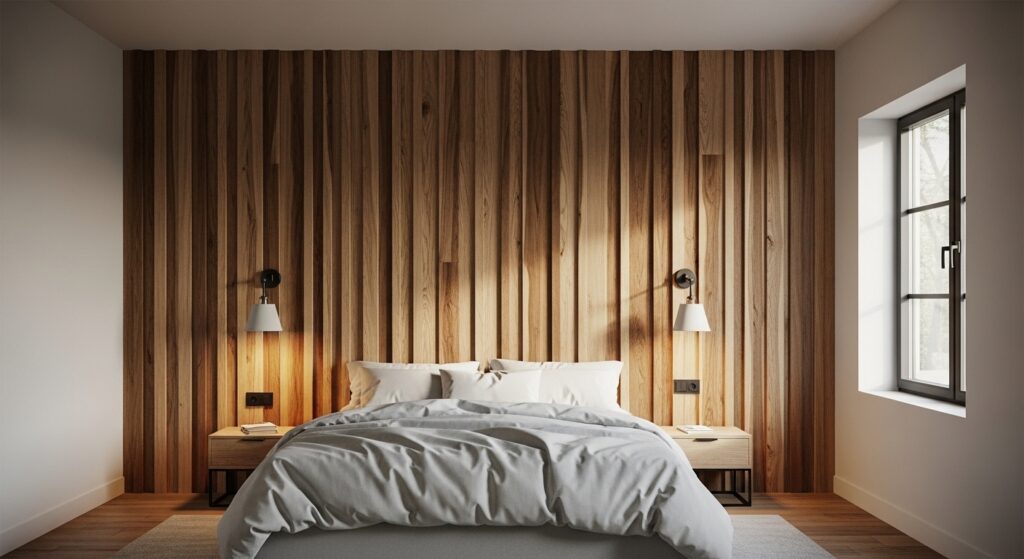
Vertical wood planks draw eyes upward, making ceilings appear higher and rooms feel more spacious and grand. Install planks of varying widths in natural wood tones for organic, dynamic visual interest and authentic character. The vertical orientation creates a striking focal point perfect for positioning behind beds, sofas, or dining tables. Mix different wood species—oak, pine, cedar—for subtle color variation and authentic reclaimed appearance. Leave natural grain visible and apply clear sealant to protect while showcasing wood’s inherent beauty.
This design adds impressive architectural drama while maintaining natural, organic feel throughout your space. The vertical lines create upward movement and visual energy compared to horizontal applications. Varying plank widths prevents the monotony of perfectly uniform boards, adding authentic character and visual appeal. This treatment works particularly well in rooms with low ceilings, visually stretching walls upward and creating illusion of height. The natural wood tones add warmth without requiring paint, celebrating wood’s raw beauty and organic variations. Consider extending planks onto ceiling for even more dramatic impact in statement spaces like dining rooms or home offices.
3. Reclaimed Barn Wood Wall
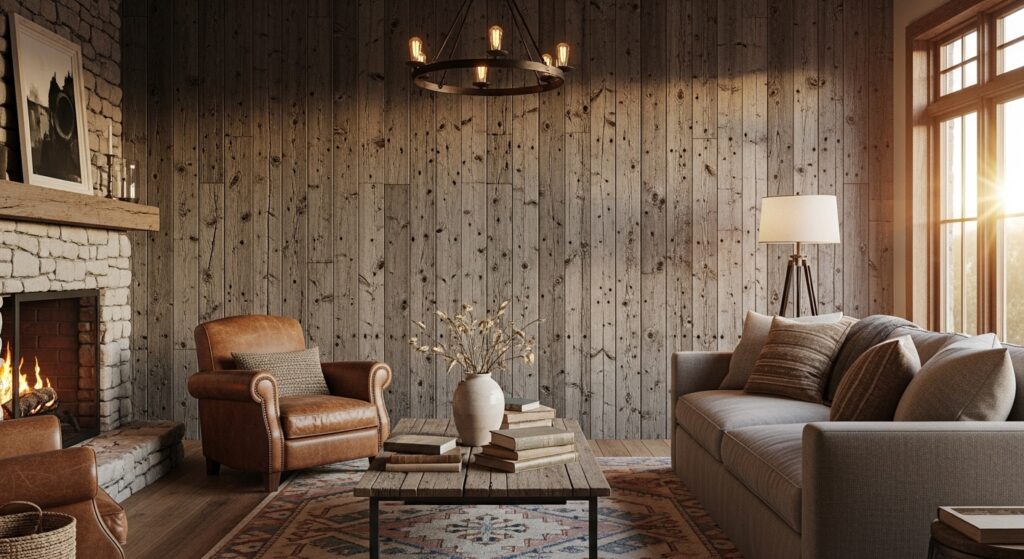
Reclaimed barn wood brings unmatched character, history, and authenticity to any space with its weathered beauty. Source genuine reclaimed wood from old barns, fences, or demolished buildings featuring natural gray weathering and vintage patina. The varied tones—silver-gray, warm brown, aged black—create organic color variation that feels collected over time. Visible nail holes, saw marks, and natural imperfections add authentic character that new wood cannot replicate. Install planks in random patterns rather than uniform alignment for authentic, organic appearance.
This sustainable choice diverts waste from landfills while adding genuine history and story to your walls. Each board carries marks of its previous life, creating conversation starters and meaningful connection to the past. The weathered appearance works beautifully in industrial lofts, modern farmhouses, or rustic cabins alike. Reclaimed wood often features tighter grain from old-growth timber, providing superior quality compared to new lumber. Seal properly to prevent splinters and preserve the wood while maintaining its authentic aged appearance. This investment in authentic materials creates focal walls with genuine soul and substance.
4. Herringbone Pattern Wood Wall
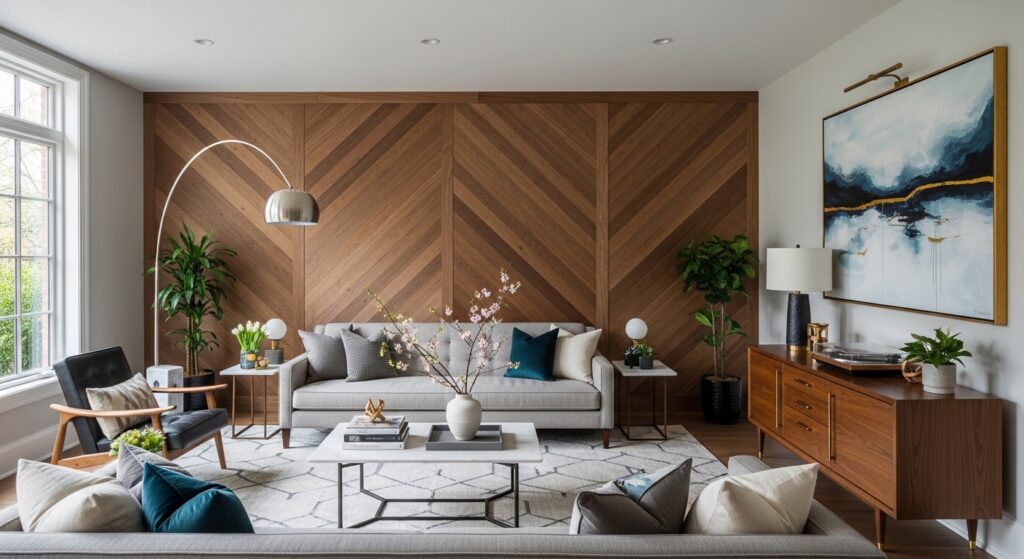
Herringbone pattern creates stunning geometric interest through diagonal planks arranged in distinctive V-shaped weaving pattern. Cut uniform wood planks at 45-degree angles, alternating direction to create the classic herringbone pattern. Use rich walnut, oak, or mixed wood tones for depth and dimensional beauty. This intricate pattern adds upscale, custom millwork appearance that dramatically elevates any space. The diagonal lines create dynamic movement and visual energy compared to standard horizontal or vertical installations.
This labor-intensive pattern delivers impressive results worth the extra effort and investment required. The geometric precision creates sophisticated, designer-level detail that becomes room-defining focal point. Herringbone works beautifully at smaller scale as headboard alternative or larger scale covering entire accent walls. The pattern draws eyes and creates visual interest that sustains attention rather than becoming boring backdrop. Consider professional installation for this complex pattern unless you’re confident in precise carpentry skills. This show-stopping treatment proves wood walls can be both naturally organic and highly architectural simultaneously.
5. Whitewashed Wood Planks
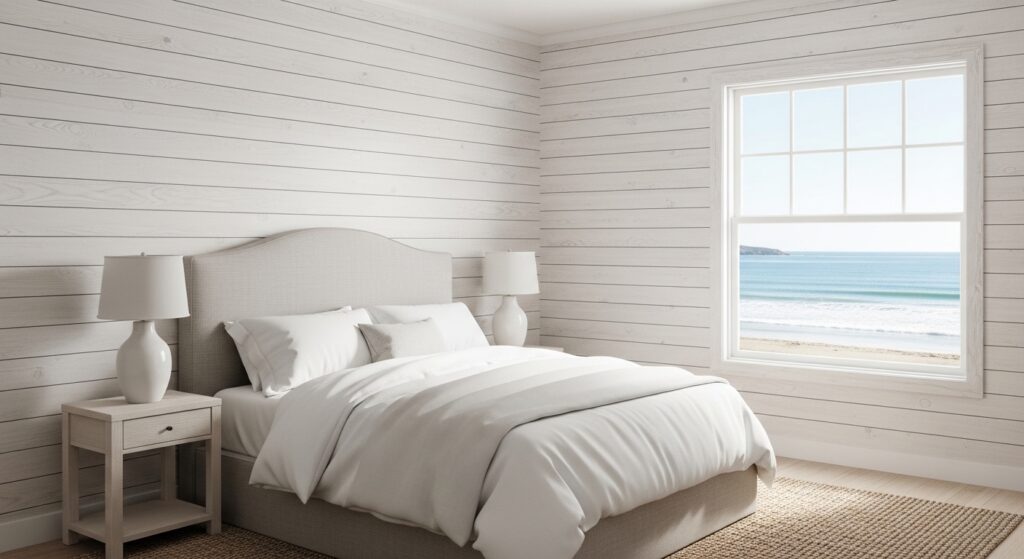
Whitewashing wood preserves beautiful grain patterns while adding bright, airy quality perfect for coastal or Scandinavian styles. Apply diluted white paint or specialty whitewash stain allowing wood grain to show through clearly. Install horizontally for traditional appeal or vertically for height-enhancing effect. The technique adds brightness without losing wood’s inherent texture and organic character. Varying application thickness creates organic color variation adding depth and authenticity.
This treatment lightens spaces while maintaining natural material warmth that pure painted walls lack. Whitewashed wood feels casual and relaxed, perfect for bedrooms, bathrooms, or living areas. The technique works beautifully with new pine or reclaimed wood equally well. Apply multiple thin coats rather than single heavy application for optimal grain visibility. Seal with matte polyurethane to protect while maintaining the soft, chalky appearance. This approach bridges the gap between natural wood warmth and bright, light-reflecting white walls beautifully.
6. Dark Stained Wood Panel Wall
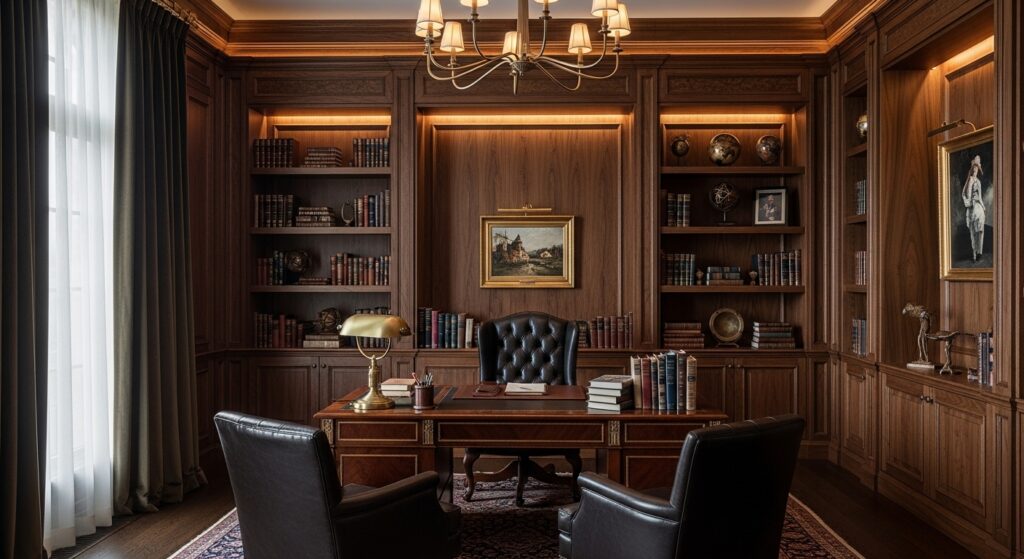
Dark-stained wood creates dramatic, sophisticated atmosphere perfect for studies, dining rooms, or bedrooms. Apply rich walnut, ebony, or dark espresso stain to quality wood planks or panels. Install floor-to-ceiling for maximum impact and library-like elegance. The deep tones add weight and gravitas while showcasing wood grain through transparent staining. Pair with brass or gold metallic accents and warm lighting to prevent spaces from feeling too dark or heavy.
This bold treatment creates moody sophistication and masculine elegance in intentional, dramatic spaces. The dark walls make artwork, metallic accents, and light-colored furniture pop with striking contrast. Adequate lighting becomes crucial—layer multiple warm light sources to illuminate dark surfaces properly. Consider dark wood in rooms with abundant natural light to prevent cave-like feelings. The dramatic backdrop creates intimate, cozy atmosphere perfect for evening entertaining or quiet work. This confident design choice demonstrates that wood walls can create powerful mood and sophisticated drama.
7. Mixed-Width Plank Wall
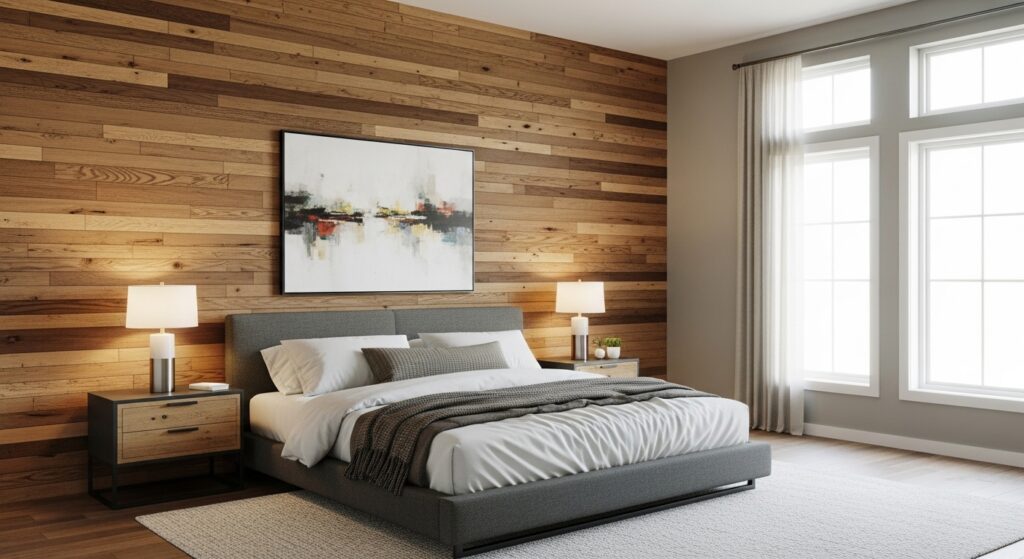
Mixed-width planks create organic, authentic appearance that mimics reclaimed or salvaged wood aesthetically. Combine planks in varied widths—3-inch, 5-inch, 8-inch—installed horizontally or vertically for dimensional interest. Use different wood species or stains for subtle color variation adding depth. The random widths prevent the uniformity that can feel too perfect or manufactured. This approach adds character while allowing use of leftover lumber or economical wood grades mixed together.
The varied widths create rhythm and visual movement that keeps eyes engaged exploring the wall. This technique works equally well with new wood stained in matching tones or genuinely reclaimed pieces. The organic appearance feels less formal and more approachable than perfectly uniform installations. Mixed widths also hide imperfections more forgivingly since the wall already has intentional variation built in. Plan your layout on the floor first, arranging pleasing width combinations before installation. This approach delivers custom, high-end appearance while potentially using more economical materials mixed together strategically and beautifully.
8. Geometric Wood Wall Art
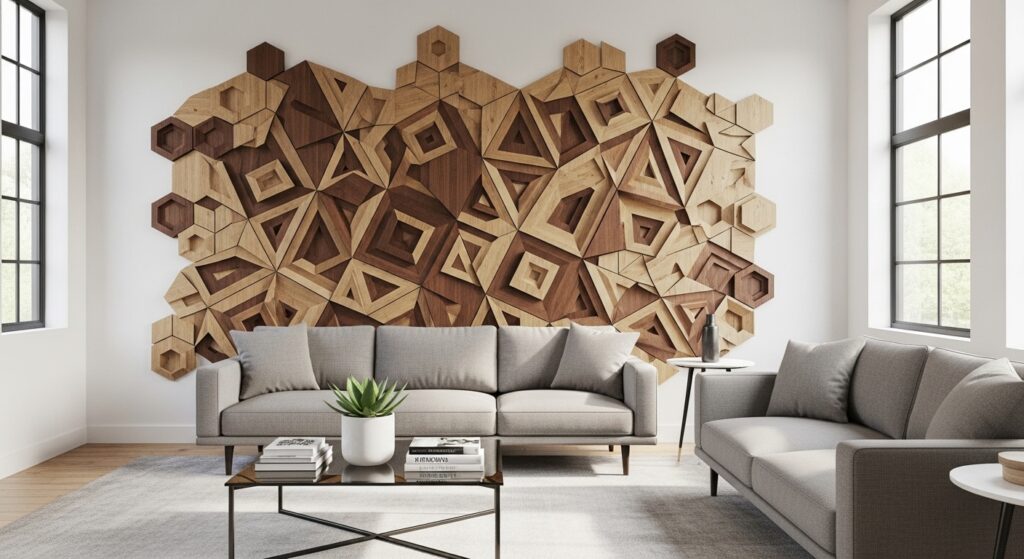
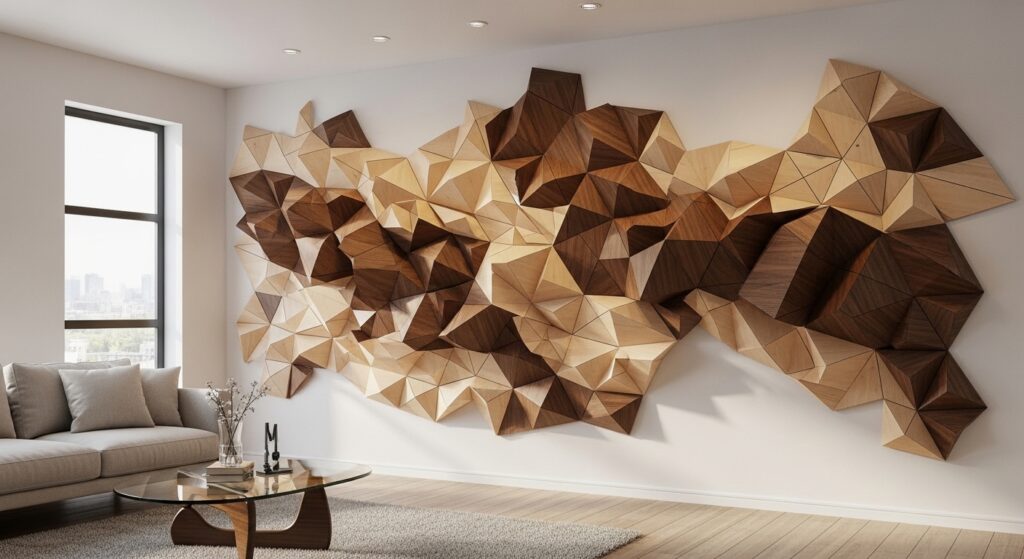
Geometric wood wall art combines craftsmanship with artistic expression creating sculptural focal points. Cut wood into geometric shapes—triangles, hexagons, diamonds—arranging in intentional patterns on wall. Vary wood tones, grain directions, and piece sizes for visual complexity and depth. The three-dimensional quality creates captivating shadow patterns and textural interest. This approach transforms wood wall treatment into functional art installation rather than just architectural backdrop.
This contemporary treatment works beautifully in modern, eclectic, or artistic spaces embracing creative expression. The geometric precision creates sophisticated, intentional aesthetic that feels curated and designed. Consider starting with smaller section as artistic focal point rather than covering entire walls. The varied angles and dimensions create ever-changing appearance as natural light moves throughout day. Purchase pre-made geometric wood art kits or design custom patterns reflecting personal style. This artistic approach proves wood walls can function as statement art pieces elevating spaces beyond traditional architectural treatments.
9. Wood Slat Wall with Gaps
Wood slats with intentional gaps create contemporary linear pattern with dimensional shadow play throughout the day. Install horizontal or vertical wood slats with consistent spacing—typically 1-3 inches—between each piece. Paint the wall behind black or dark gray so gaps read as intentional shadow lines. Use dark-stained wood or painted slats for modern sophistication, or natural wood for organic warmth. The gaps create depth and visual interest while reducing material costs compared to solid wood coverage.
This modern treatment adds architectural interest with clean, linear aesthetic perfect for contemporary spaces. The gaps allow integration of lighting behind slats for dramatic backlit effect creating ambient glow. The dimensional quality prevents walls from appearing flat despite minimal material use. This approach works beautifully in bedrooms, living rooms, or commercial spaces requiring sophisticated modern aesthetic. The slat spacing creates rhythm and pattern that’s visually engaging without being busy or overwhelming. Consider adding acoustic insulation behind slats for sound-dampening benefits in noisy spaces or home theaters.
10. Live Edge Wood Feature
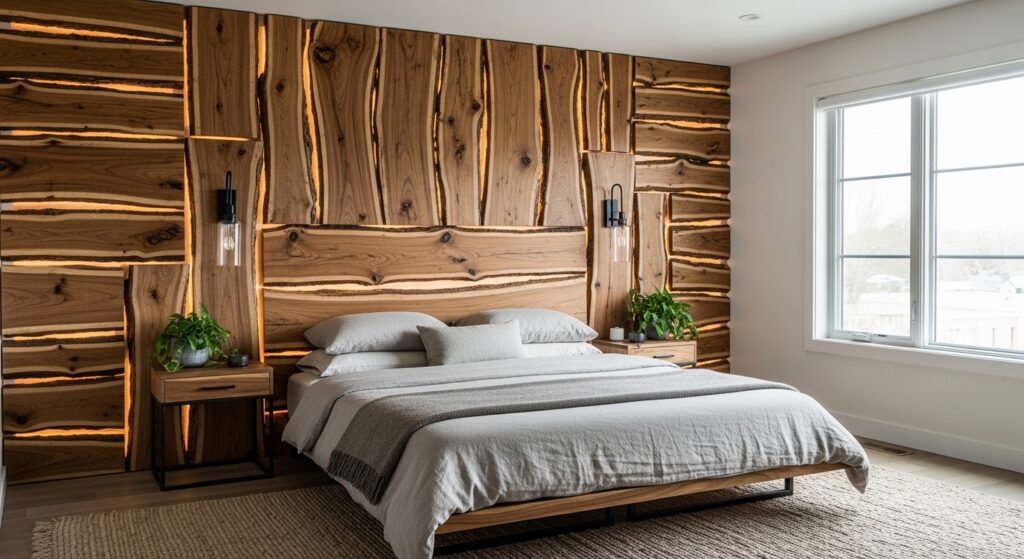
Live edge wood preserves the tree’s natural contours and bark edges creating organic, one-of-a-kind beauty. Mount large live edge slabs horizontally behind beds as dramatic natural headboards. The preserved bark edge and flowing lines celebrate wood’s natural form before milling. Each piece is completely unique with unrepeatable grain patterns, knots, and edge variations. The raw, organic aesthetic brings nature’s sculpture directly onto your walls.
This statement treatment works beautifully in modern, rustic, or biophilic design schemes celebrating natural materials. The substantial wood presence creates grounding focal point connecting interior spaces to forests and nature. Live edge slabs represent significant investment but deliver unmatched character and authenticity. Properly dried and sealed wood prevents cracking and maintains beautiful appearance for decades. Consider featuring single dramatic slab rather than covering entire walls to showcase its unique beauty. This approach honors the tree’s life and form, creating meaningful connection between built and natural environments.
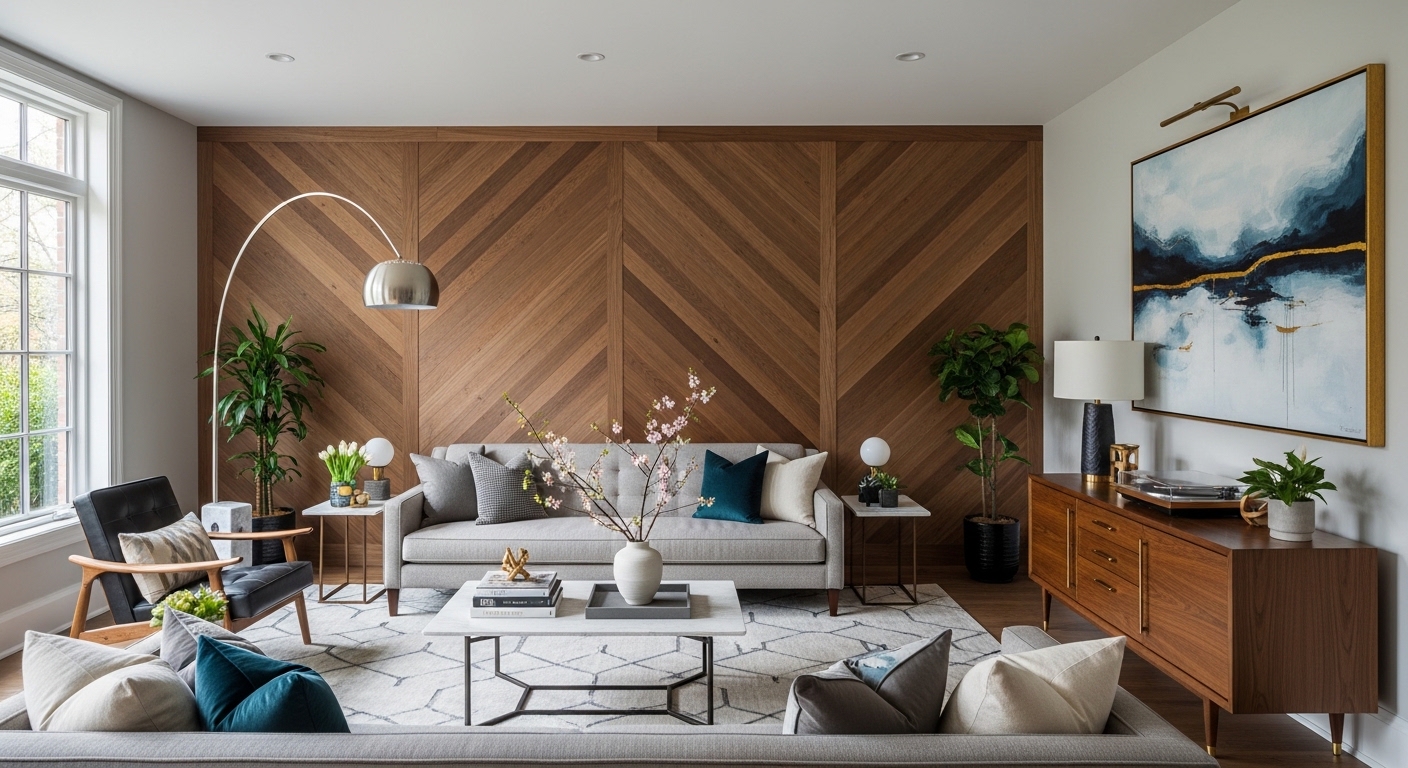
11. Chevron Pattern Accent Wall
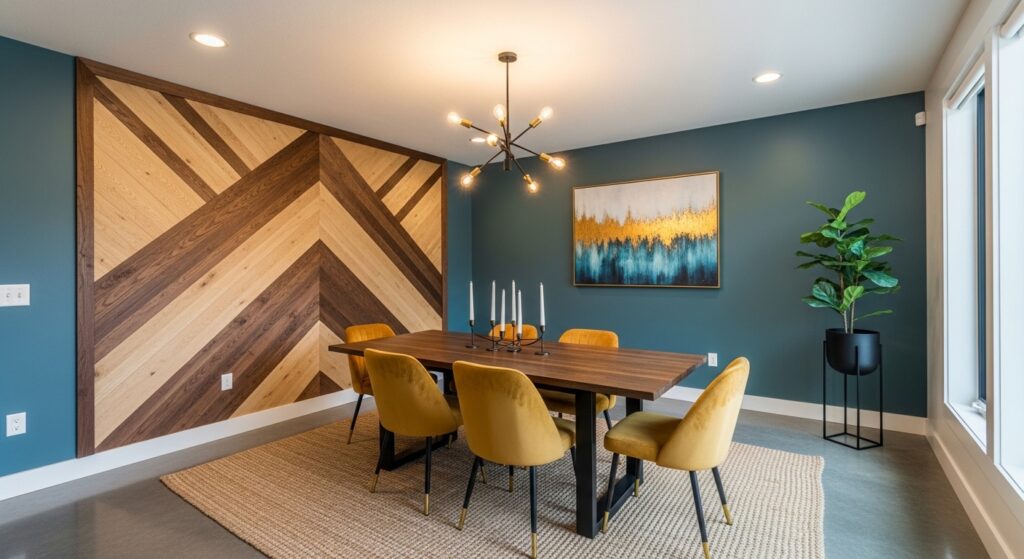
Chevron pattern creates bold, dynamic zigzag effect through wood planks meeting at precise points. Cut planks at consistent angles—typically 45 degrees—meeting at center seam to create distinctive V-shaped pattern repeating up the wall. Alternate light and dark wood tones for maximum contrast and pattern visibility. The strong diagonal lines create dramatic movement and contemporary geometric sophistication. This eye-catching pattern works best as single accent wall rather than entire room to prevent overwhelming visual impact.
Chevron requires precise cutting and installation for clean, professional results where all points align perfectly. The dramatic pattern makes powerful statement that becomes room’s undisputed focal point and conversation starter. Consider smaller-scale application behind beds or in powder rooms if full wall feels too bold. The pattern works beautifully in modern, contemporary, or eclectic spaces embracing graphic design elements. Professional installation recommended unless you’re experienced with precision carpentry and complex angle cutting. This show-stopping treatment proves wood walls can make bold, contemporary statements beyond rustic or traditional applications.
12. Ceiling-to-Floor Wood Continuity
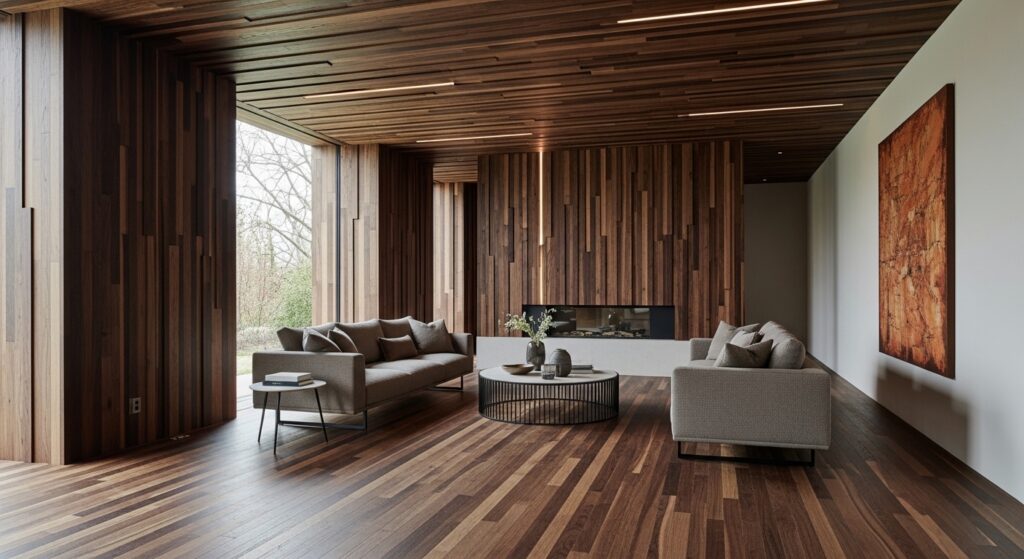
Extending wood from floor up walls and across ceiling creates seamless, enveloping effect with dramatic impact. Use matching or complementary wood tones creating visual continuity from floor to ceiling. The uninterrupted flow eliminates visual breaks making spaces feel larger and more cohesive. This bold treatment works best in modern, minimalist, or Scandinavian spaces appreciating organic simplicity. The wood envelope creates cabin-like coziness while maintaining contemporary clean lines.
This comprehensive treatment requires significant material investment but delivers unparalleled architectural presence and warmth. The continuous wood surfaces absorb sound, making rooms quieter and more intimate feeling. Consider this approach in bedrooms, studies, or meditation spaces benefiting from cocoon-like atmosphere. The seamless integration creates striking visual impact that transforms ordinary rooms into extraordinary architectural statements. Professional installation recommended for ceiling work requiring proper structural support and precise alignment. This immersive treatment demonstrates maximum commitment to natural materials creating powerful, memorable spaces.
13. Rustic Wood Beam Accent
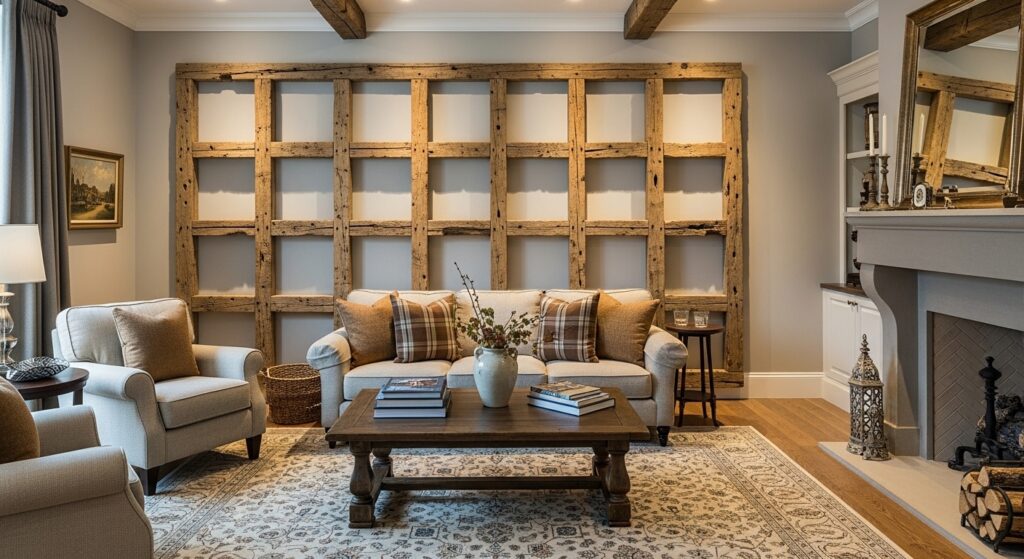
Mounting dimensional wood beams on walls creates pronounced three-dimensional architectural detail and character. Install substantial beams—6×6 or larger—horizontally, vertically, or in grid patterns adding significant visual weight. The beams cast strong shadows creating depth and presence impossible with flat planks. Reclaimed beams add authentic age and character with weathered surfaces and original hardware marks. This treatment adds instant architectural gravitas to plain walls lacking original period details.
The dimensional quality makes powerful statement transforming walls from flat surfaces to sculptural elements. This approach works beautifully in spaces desiring traditional, rustic, or farmhouse character and authenticity. The beams can be structural or purely decorative depending on installation method and wall construction. Consider staining or painting beams to coordinate with overall color scheme while maintaining wood texture. The substantial presence makes rooms feel more custom and architecturally significant. This treatment proves wood walls can create dramatic dimensional impact beyond thin plank applications.
14. Two-Tone Wood Wall
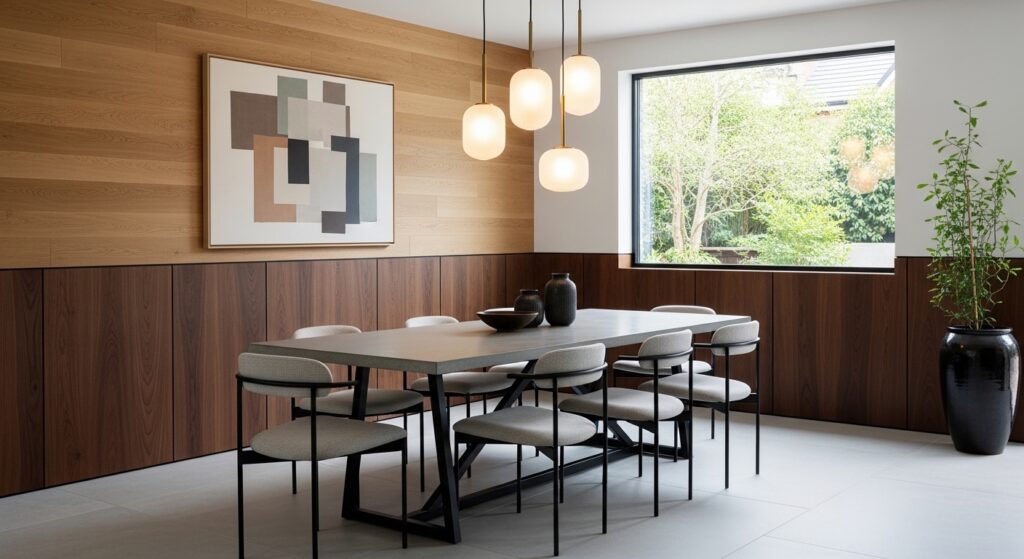
Two-tone wood walls create sophisticated color blocking through contrasting wood species or stains. Divide wall horizontally, typically at chair rail height or mid-wall, using dark wood below and light wood above. The contrasting tones create defined visual interest and architectural detail. This approach adds dimension and prevents single-tone wood from feeling monotonous or overwhelming. The color division can make ceilings appear higher or rooms feel more proportioned depending on placement.
This technique works beautifully in dining rooms, bedrooms, or entryways benefiting from added visual structure. The division line can incorporate trim molding for traditional elegance or remain simple and modern. Consider using same wood species with different stains for cohesive appearance, or mix species entirely for more contrast. The two-tone approach allows incorporating both light brightness and dark drama within single wall. This balanced treatment demonstrates that wood walls can incorporate variety and contrast while maintaining sophisticated, cohesive aesthetic.
15. Wood Mosaic Wall
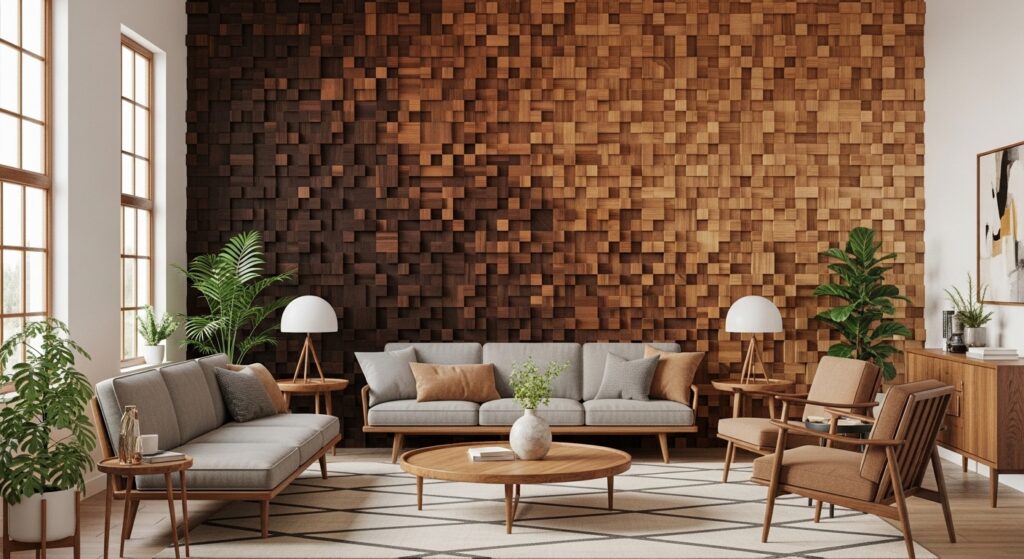
Wood mosaic walls create intricate patterns through small wood blocks arranged like pixels or tiles. Cut uniform wood squares or rectangles, varying tones from light to dark creating ombré or gradient effects. The tiny pieces create textural richness and visual complexity at close range. Arrange blocks randomly for organic feel or in intentional patterns for geometric precision. This labor-intensive technique creates stunning focal walls that function as three-dimensional art installations.
The mosaic approach uses wood scraps and offcuts efficiently, making it eco-friendly and economical despite time investment. The varied tones and grain directions create depth impossible with single wood pieces. This treatment works beautifully as smaller accent areas rather than entire walls due to visual intensity. The textural quality invites touching and close inspection revealing intricate detail. Consider professional artists or skilled craftspeople for complex patterns requiring design expertise. This artistic treatment transforms wood into medium for creative expression and stunning visual impact.
16. Diagonal Wood Plank Pattern
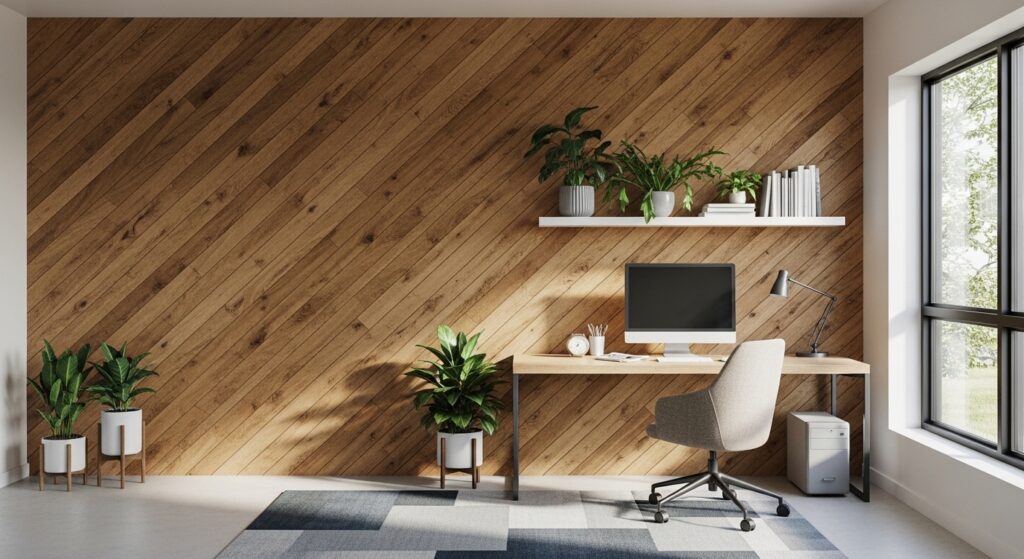
Diagonal planks create dynamic movement and energetic visual flow through unexpected angles. Install wood planks at 45-degree angle from floor to ceiling, creating bold diagonal lines. This unconventional orientation makes walls feel more dynamic and contemporary compared to standard horizontal or vertical installations. The angles create visual energy perfect for creative spaces, studios, or modern living areas. Consider running diagonals in opposite directions on adjacent walls for even more dramatic geometric effect.
This bold treatment requires careful planning and precise cutting to achieve clean corner transitions. The diagonal lines make spaces feel more expansive and visually interesting than standard orientations. This approach works particularly well in smaller rooms benefiting from dynamic visual interest and perceived expansion. The unexpected angle demonstrates creative thinking and design confidence beyond safe, conventional choices. Professional installation recommended for achieving precise angles and clean corners throughout. This contemporary treatment proves traditional materials can create cutting-edge, modern aesthetic through innovative installation approaches.
17. Painted Wood Plank Wall
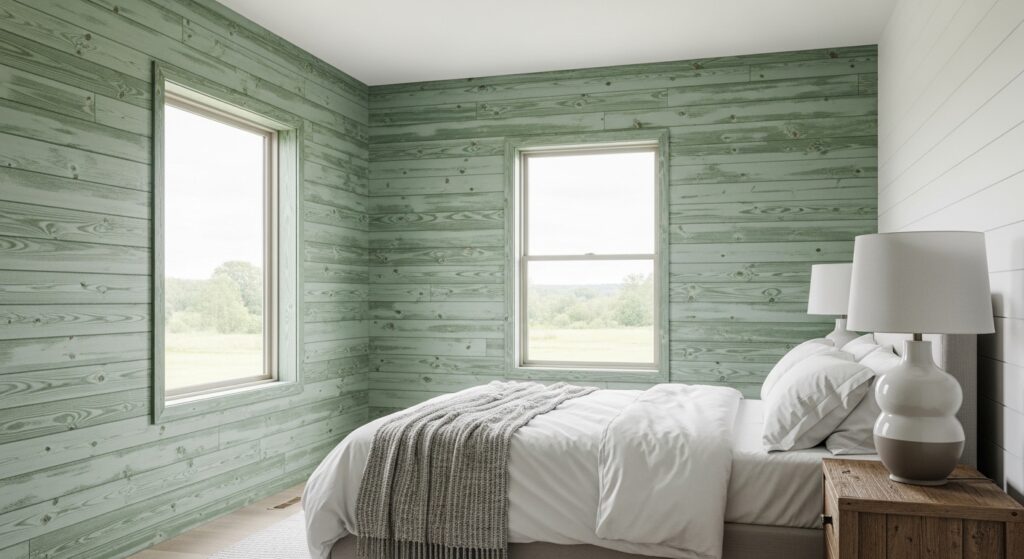
Painting wood planks adds color while maintaining texture and dimension that flat painted drywall lacks. Install real wood planks then paint in desired color preserving wood grain visible through paint. Choose matte or eggshell finishes showcasing texture better than high-gloss. This approach adds architectural interest of wood installation while incorporating specific color requirements. The texture creates depth and shadow lines adding visual interest to painted surfaces.
This treatment bridges gap between natural wood and painted walls, offering best of both approaches. The wood texture remains tactile and dimensional even under paint, creating visual richness. This option works beautifully when wood tones don’t suit color schemes but texture is desired. Consider bold colors like navy, sage, or charcoal for dramatic impact with textural interest. The painted wood maintains architectural detail while allowing complete color customization. This versatile approach demonstrates wood walls work with any color palette when texture remains priority.
18. Stacked Wood Block Wall
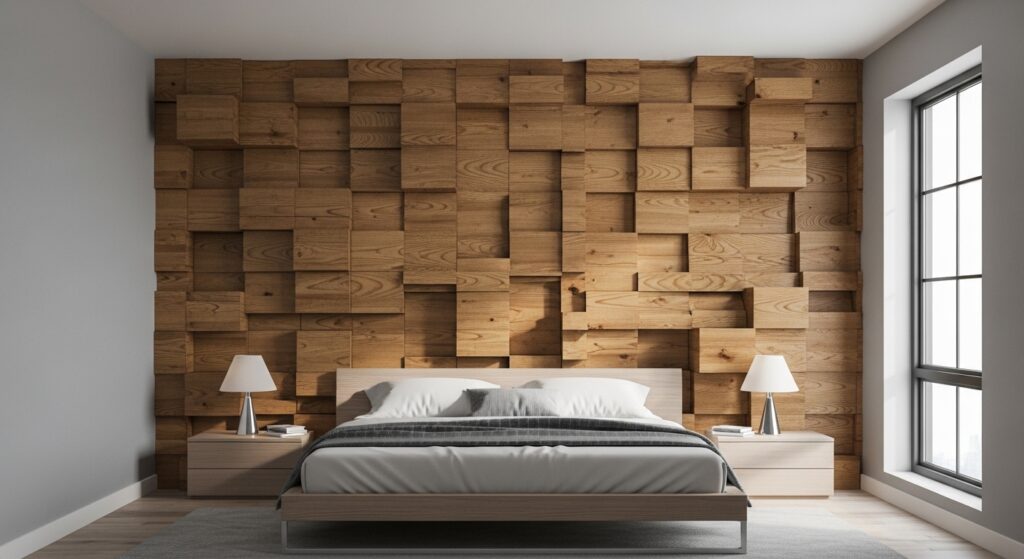
Stacked wood blocks create relief sculpture effects through varied depths and layering creating captivating shadows. Cut blocks in uniform sizes but varying depths—1 inch to 4 inches—creating dimensional installation. Arrange blocks randomly or in intentional gradient patterns transitioning from flat to deeply layered. The varying depths create ever-changing shadow patterns as light moves throughout the day. This sculptural approach transforms wood wall into dynamic art installation engaging viewers spatially.
This contemporary treatment requires significant planning to achieve balanced, visually pleasing depth variation. The three-dimensional quality creates textural richness that invites both visual and tactile exploration. Consider smaller installations as artistic focal points rather than full wall coverage due to visual complexity. The dramatic shadows and depth work beautifully with targeted lighting emphasizing dimensional qualities. This technique uses more material than flat installations but delivers unmatched visual impact. This innovative treatment demonstrates wood’s potential for creating contemporary sculptural installations beyond traditional flat applications.
19. Industrial Wood and Metal Accent
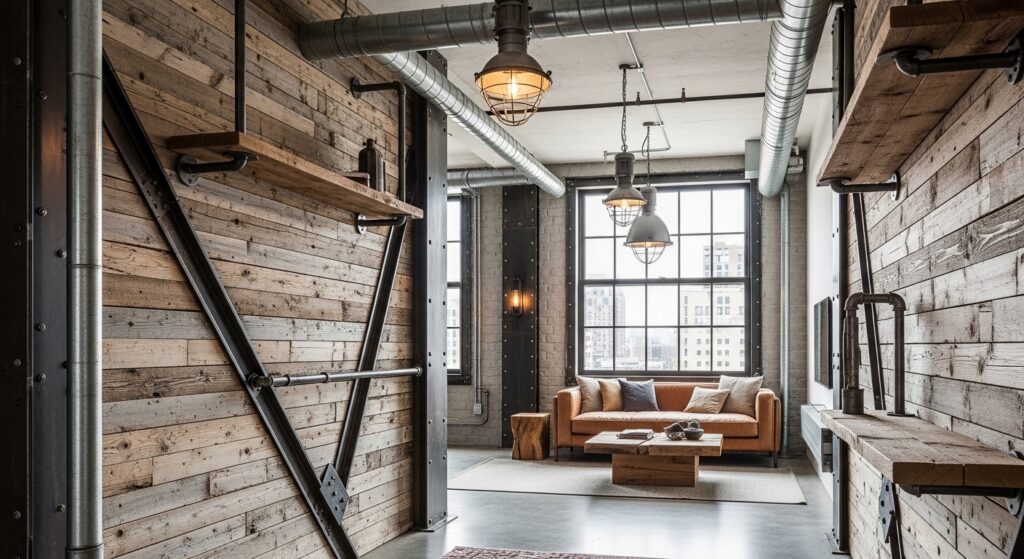
Combining wood with metal elements creates industrial-chic aesthetic blending organic and manufactured materials. Install reclaimed wood planks accented with visible metal brackets, steel frames, or pipe details. The contrast between warm wood and cool metal creates dynamic visual tension and contemporary edge. Expose hardware and structural elements rather than hiding them for authentic industrial character. This mixed-material approach works beautifully in lofts, modern spaces, or urban homes embracing industrial design.
The metal elements add structural interest while wood provides essential warmth preventing cold industrial feel. This treatment celebrates honest materials and visible construction methods rather than concealing them. The juxtaposition creates sophisticated, layered aesthetic appealing to modern design sensibilities. Consider incorporating Edison bulb lighting or other industrial elements reinforcing cohesive design story. This approach works particularly well in open-concept spaces, home offices, or entertainment areas. The mixed-material treatment proves wood walls successfully integrate with other materials creating contemporary, eclectic, and visually engaging spaces.
Conclusion
Wood wall treatments offer endless possibilities for transforming your space with natural beauty, warmth, and architectural character that few other materials can match. These 19 stunning ideas demonstrate wood’s incredible versatility—from rustic reclaimed barn wood to sleek geometric patterns, dramatic dark stains to bright whitewashed planks, simple horizontal shiplap to complex mosaic installations. Whether you’re drawn to subtle texture or bold statement walls, traditional applications or contemporary innovations, wood walls add timeless appeal and organic authenticity that elevate any room.
When planning your wood wall project, consider your space’s existing style, natural lighting, and the atmosphere you want to create. Start with a single accent wall if you’re hesitant about full commitment, or embrace wood comprehensively for maximum impact and architectural presence. Remember that quality installation is crucial—invest in proper materials, take time for precise measurements, and consider professional help for complex patterns or ceiling applications. With thoughtful planning and execution, a stunning wood wall can become your space’s defining feature, adding value, character, and natural beauty that you’ll appreciate for years to come. Let these ideas inspire you to embrace wood’s transformative power and create a space that’s uniquely beautiful, warmly inviting, and architecturally distinctive.