How to Master Cozy Moody Living Room Vibes at Home
Creating a living room that’s both moody and cozy might seem contradictory at first—how can dark, dramatic spaces also feel warm and inviting? The secret lies in striking the perfect balance between atmospheric depth and genuine comfort, between sophisticated darkness and welcoming warmth. A cozy moody living room is the ultimate sanctuary: intimate enough to feel protected, dark enough to create drama, yet comfortable enough to spend entire weekends wrapped in blankets with a good book. This comprehensive guide will walk you through every essential element needed to master this captivating aesthetic, from choosing the perfect paint colors to layering lighting that transforms your space from day to night. Get ready to create a living room that’s equal parts sophisticated and snuggly.
1. Start with the Right Foundation Colors
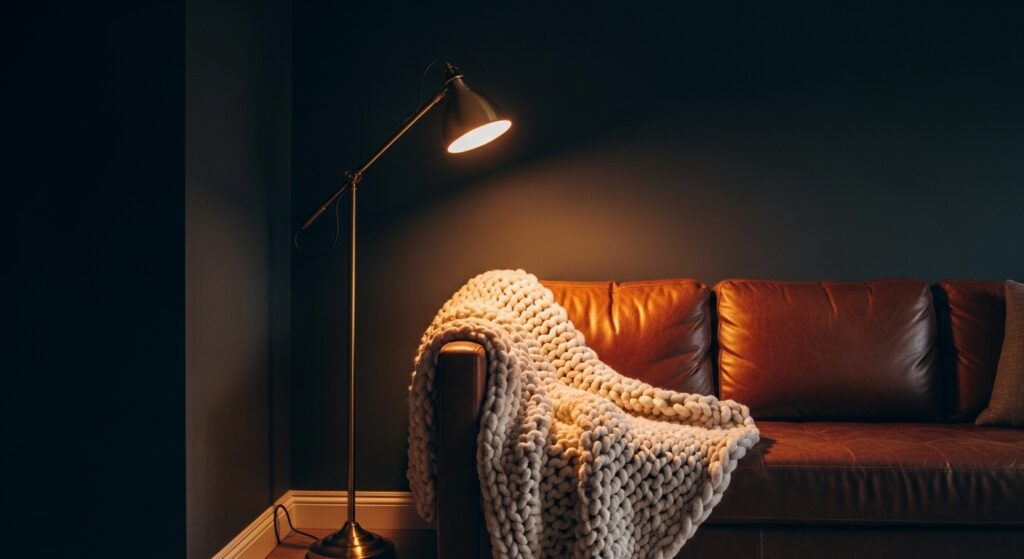
The foundation of any cozy moody living room begins with choosing colors that create depth without feeling cold or oppressive. Paint walls in warm, deep tones like charcoal with brown undertones, deep forest green, or navy with gray undertones rather than pure black. These rich colors create the moody backdrop you’re seeking while maintaining warmth that prevents the space from feeling unwelcoming. Add lighter warm neutrals through furniture and textiles—cream, camel, warm taupe—to balance the darkness and create visual relief.
The key is avoiding cool-toned dark colors like icy grays or blue-blacks that read cold rather than cozy. Test paint samples in your actual space, observing how they look in different lighting throughout the day and evening. Consider painting just one or two accent walls dark if full-room darkness feels too intense initially. The warm undertones in your dark colors make all the difference between moody-cozy and simply dark-depressing. This foundational color choice sets the tone for everything else and determines whether your space ultimately feels like a warm cave or a cold dungeon.
2. Layer Multiple Light Sources at Different Heights
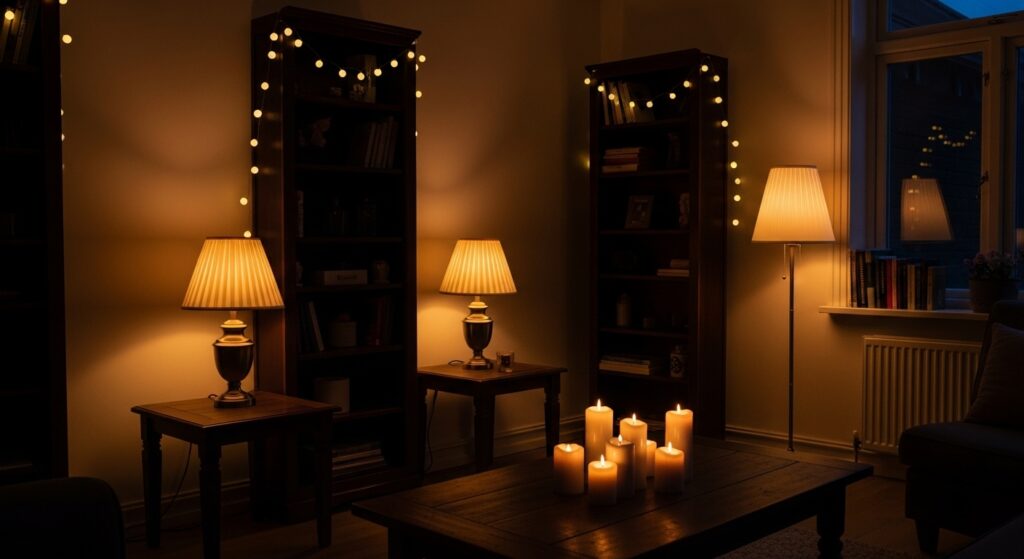
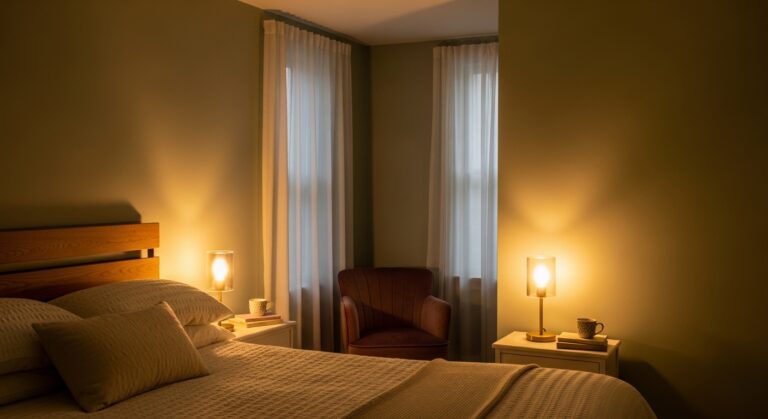
Lighting is absolutely crucial—perhaps the single most important element in creating cozy moody vibes that actually work. Install at least five to seven different light sources throughout your living room at varying heights. Place table lamps with warm bulbs on side tables flanking your sofa. Add a tall floor lamp in a corner to eliminate dark spots. Hang string lights along bookshelves or around windows for twinkling ambient warmth. Scatter candles across your coffee table and mantel for flickering, living light.
Use exclusively warm-toned bulbs (2700K or lower) to create that golden, firelight glow rather than harsh white light. Install dimmer switches on all controllable fixtures so you can adjust brightness based on mood and activity. The goal is creating multiple pools of warm light rather than one central overhead fixture flooding everything equally. Each light source should be individually adjustable, allowing you to customize the atmosphere throughout the day. This layered approach ensures you can see what you need to see while maintaining the intimate, moody atmosphere that makes the space special.
3. Invest in Plush, Touchable Textures

Texture transforms moody spaces from visually interesting to genuinely cozy and inviting to actually use. Layer your sofa with velvet cushions in jewel tones or warm neutrals that feel luxurious to touch. Drape a faux fur or chunky knit throw across the arm within easy reach. Add a leather ottoman that develops beautiful patina while providing soft footrest. Include woven baskets, nubby wool rugs, and smooth ceramic accessories for varied tactile experiences throughout your space.
The abundance of soft, touchable materials creates sensory richness that makes people want to settle in and stay. Mix at least five different textures within your space to create that layered, collected look. The plush elements balance the visual weight of dark colors, preventing the room from feeling heavy or oppressive. Quality textiles in natural fibers like cotton, linen, wool, and silk feel better and last longer than synthetic alternatives. These touchable layers prove that moody spaces can be supremely comfortable and inviting rather than just dramatically beautiful to look at from afar.
4. Create Intimate Furniture Arrangements
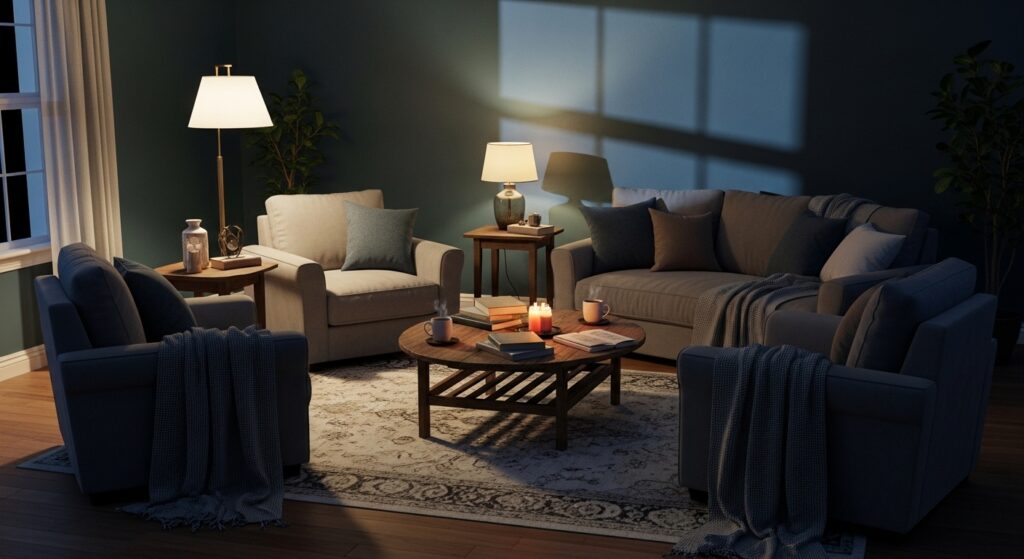
Furniture placement dramatically affects how cozy and moody your living room feels in actual use. Pull furniture away from walls and arrange pieces in close groupings that encourage conversation and connection. Position your sofa and chairs facing each other at comfortable distances—close enough to talk easily without raising voices. Add a substantial coffee table within reach of all seating for functional convenience. Leave adequate walkways but resist spreading furniture around the room’s perimeter.
This intimate arrangement enhances the cocoon-like feeling that dark colors naturally create throughout your space. The close grouping makes even large rooms feel intentionally cozy rather than cavernous and empty. Angling chairs slightly rather than placing them perfectly parallel adds casual, welcoming energy. Ensure everyone in the seating area can make comfortable eye contact without craning necks. This thoughtful arrangement tells guests that your living room is designed for genuine connection and comfortable conversation, not just for looking at from the doorway.
5. Add Warm Wood Tones Throughout
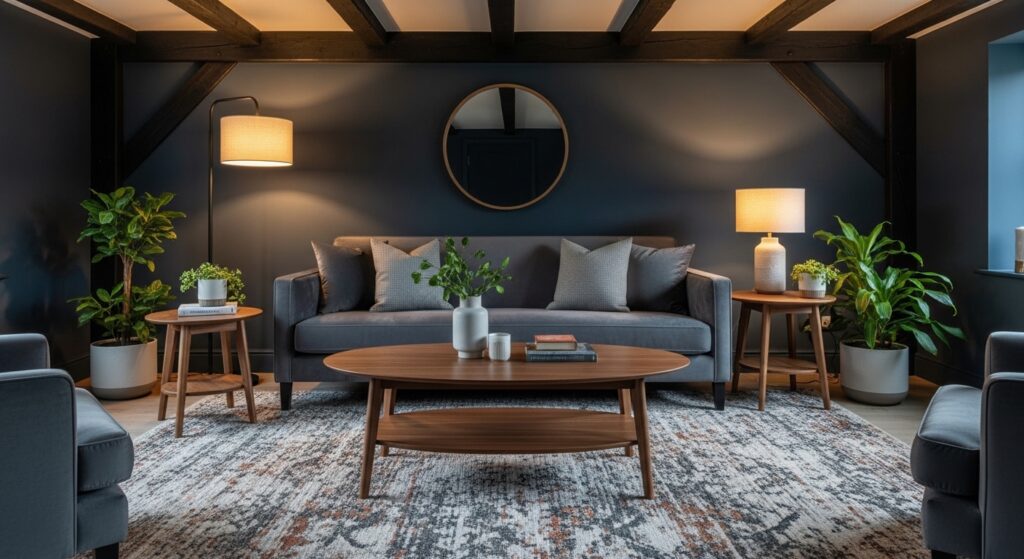
Natural wood in warm tones provides essential organic warmth that prevents moody spaces from feeling cold or sterile. Choose furniture in medium to dark woods like walnut, cherry, or warm-toned oak that complement rather than compete with dark walls. A substantial wooden coffee table grounds your seating area with natural beauty and warmth. Wooden side tables, shelving, and picture frames distribute warm wood tones throughout the space. If possible, exposed wooden beams or wood paneling adds architectural warmth.
The natural grain patterns add organic visual interest that breaks up solid dark colors beautifully. Wood brings irreplaceable warmth that painted or metal furniture cannot match in moody settings. Mix wood tones slightly rather than matching everything perfectly for authentic, collected character. The wood connects your interior to nature, adding life and warmth to potentially heavy dark colors. Quality wooden furniture ages beautifully, developing patina and character that enhances rather than diminishes appeal. These warm natural elements create the perfect bridge between moody drama and genuine coziness.
6. Layer Rugs for Warmth and Softness

Rugs add essential warmth underfoot and visual grounding that completes cozy moody living rooms beautifully. Start with a large neutral base rug in jute, sisal, or warm-toned wool that extends under all your main furniture. Layer a smaller, more decorative rug on top—perhaps a vintage Persian or Turkish kilim in deep jewel tones and rich patterns. The layered rugs add dimensional warmth and visual interest while defining your seating area clearly.
This approach adds comfort without the expense of one massive premium rug covering your entire floor. The varied textures underfoot create sensory richness and designer-level detail that elevates the entire space. High-pile rugs feel especially luxurious and cozy in moody rooms, inviting barefoot walking. The rugs also absorb sound, making your living room feel quieter and more intimate. Ensure your base rug is large enough that all furniture legs rest on it comfortably. This layered foundation adds that essential soft, warm element that makes moody rooms genuinely cozy rather than just dark.
7. Incorporate Warm Metallic Accents
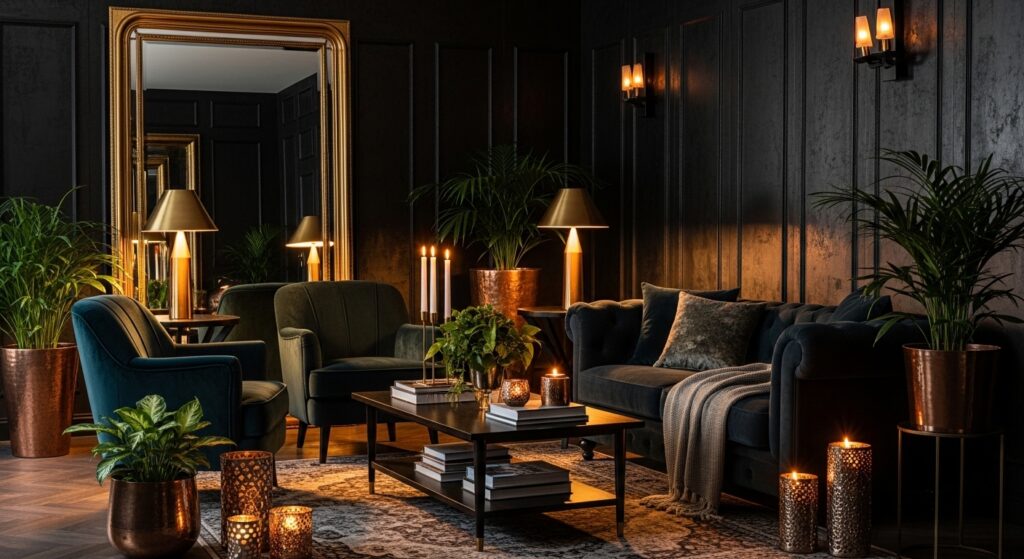
Warm metallic accents provide crucial light reflection and visual warmth in cozy moody spaces effectively. Add brass table lamps that cast warm golden light while adding metallic shimmer throughout the day. Hang a substantial gold or brass-framed mirror that multiplies available light and makes the space feel larger. Use copper plant pots, bronze candle holders, and gold picture frames distributed throughout the room. These warm metals catch and reflect light, preventing dark rooms from feeling dull or flat.
The metallic shimmer adds that essential touch of glamour and sophistication to cozy moody rooms. Warm metals feel entirely different from cool silver or chrome—they add richness rather than starkness. Antique or aged brass develops beautiful patina that adds character and prevents the space from feeling too new. Mix metallics slightly—rose gold with brass, antique bronze with polished copper—for authentic, collected appearance. These reflective accents create visual interest and ensure your moody room has that essential sparkle and light play.
8. Use Rich Jewel Tones Strategically

Jewel tones add saturated color depth that enhances both moodiness and coziness when used thoughtfully. Incorporate emerald green in a velvet armchair that invites sinking into comfort. Add burgundy or wine-colored throw pillows that create warmth against dark backgrounds. Display a sapphire blue ceramic vase or decorative objects that add color pops. These rich, saturated tones feel luxurious and warm rather than bright or jarring against dark foundations.
Jewel tones share the same depth and richness as your moody base colors, creating harmony rather than contrast. The saturated colors add visual interest and prevent all-neutral schemes from feeling boring or flat. Velvet fabric makes jewel tones appear even richer and more intense with its light-catching nap. Use jewel tones in accessories and accents rather than large furniture pieces for flexibility as your style evolves. These rich colors prove that moody rooms can incorporate color beautifully without sacrificing the intimate, dramatic atmosphere you’re creating.
9. Display Candles Abundantly

Candles are non-negotiable for achieving truly cozy moody vibes in your living room space. Group pillar candles of varying heights on your coffee table in dark or neutral holders. Line your mantel with candles that create a glowing focal point during evenings. Place candles on shelves, side tables, and any flat surface throughout the room. The flickering, living light creates unmatched warmth and atmosphere that static lighting simply cannot replicate or match.
The dancing candlelight casts beautiful shadows and creates movement that makes moody rooms feel alive and magical. Choose unscented candles if you’re sensitive to fragrances, or use warm scents like vanilla, sandalwood, or cedar. Dark candle holders in black, brass, or dark ceramic coordinate with your moody aesthetic even when candles aren’t lit. The ritual of lighting candles signals transition from daytime to cozy evening mode. For safety-conscious households, high-quality flameless LED candles provide similar visual warmth. This abundant candlelight creates that ultimate cozy atmosphere that makes moody living rooms feel truly special.
10. Add Living Greenery

Living plants add essential organic life and freshness that prevents moody rooms from feeling stale or heavy. Choose low-light tolerant plants like snake plants, pothos, or ZZ plants that thrive without bright sunlight. Display plants in matte black, dark charcoal, or terracotta planters that coordinate with your moody palette. Position a tall plant in a corner for vertical presence and smaller plants on shelves and side tables throughout.
The organic shapes and living greenery balance geometric furniture and straight architectural lines beautifully. Plants purify air and add oxygen, creating healthier indoor environments for spending extended time. Even dark-leaved plants like burgundy rubber plants or black ZZ plants add life while maintaining the moody aesthetic. The presence of living elements creates that essential connection to nature that makes spaces feel grounded. Care for plants becomes a mindful ritual that connects you to your space more deeply. These living elements prove that moody rooms can feel fresh and alive rather than dark and stagnant.
11. Incorporate Soft, Ambient Sound
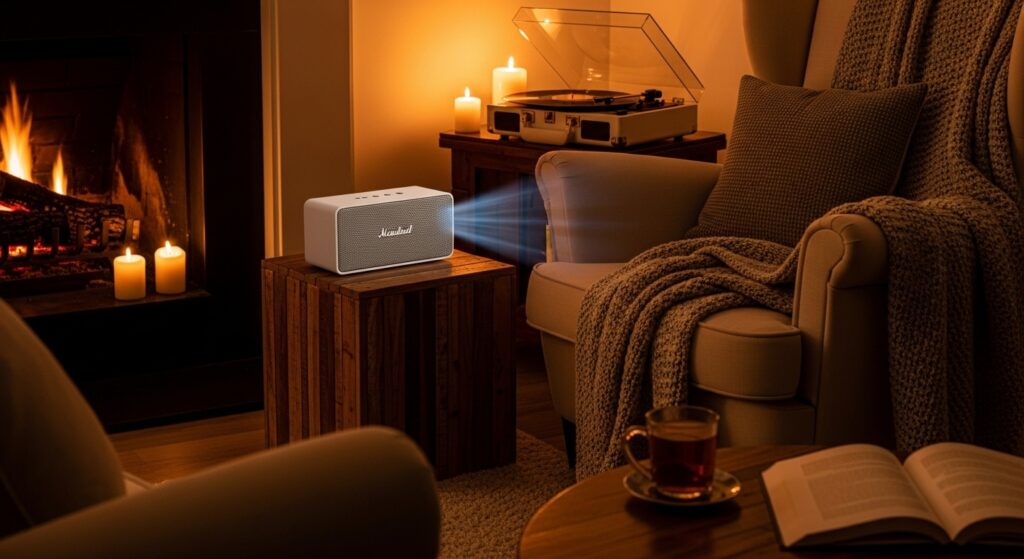
Sound contributes to coziness just as much as visual elements do in creating complete atmosphere. Play soft background music—jazz, classical, lo-fi, or acoustic—that creates welcoming ambiance without overwhelming conversation. A vintage record player adds both functional music and attractive décor that fits the moody aesthetic. Nature sounds like gentle rain, crackling fire, or soft thunder enhance the cozy cave feeling. Keep volume low enough for easy talking but present enough to fill silence pleasantly.
Music helps people relax, lowers stress levels, and creates that lived-in feeling in your living room. The ambient sound masks harsh outside noises—traffic, neighbors—making your space feel more peaceful and separate. Curate playlists for different moods and times of day that suit various activities and atmospheres. The gentle background audio makes moody rooms feel warm and inhabited rather than silent and empty. This often-overlooked sensory element completes the cozy moody experience by engaging another sense beyond sight and touch.
12. Choose the Right Window Treatments
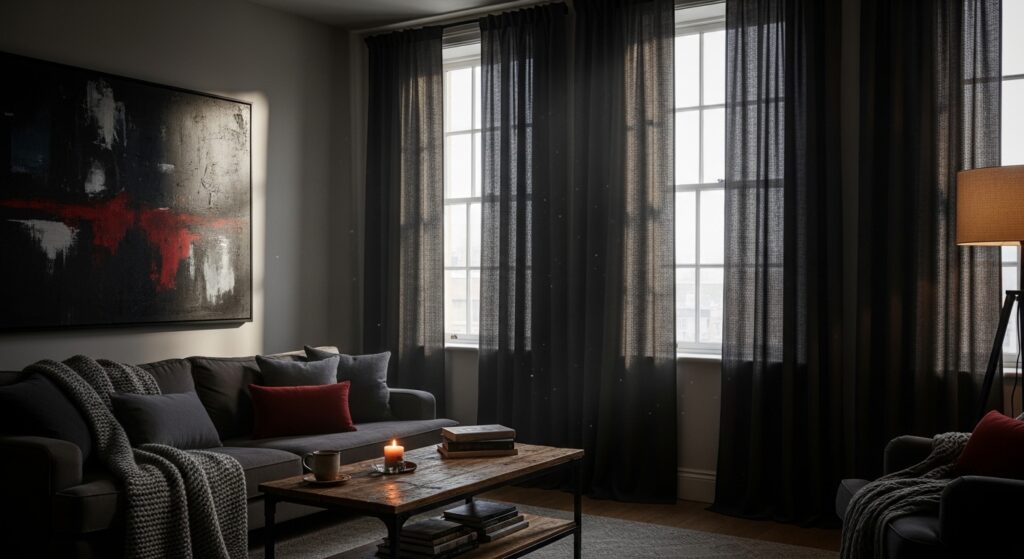
Window treatments play a crucial role in controlling light and adding softness to moody spaces. Install heavy curtains in linen, velvet, or thick cotton in charcoal, deep green, or warm brown. Hang them from ceiling to floor and extend rods beyond window frames for maximum drama. The substantial fabric provides excellent light control—you can create complete darkness or filter light to create atmospheric glow as desired.
Heavy curtains also insulate against drafts and temperature extremes, making your living room more comfortable year-round. The soft fabric adds essential visual and literal warmth that balances hard surfaces like wood and leather. Blackout lining allows you to control exactly how much light enters, crucial for creating moody atmosphere even during daylight. The vertical fabric lines draw eyes upward, making ceilings appear higher. Proper window treatments frame views beautifully while providing privacy and completing the cozy, protected feeling you’re creating in your moody sanctuary.
13. Add Personal, Meaningful Objects

Personal touches transform moody spaces from styled showrooms into genuinely cozy homes filled with meaning. Display travel souvenirs, vintage finds, and inherited items that carry personal significance and memories. Create a gallery wall with family photos in coordinating dark frames that maintain the aesthetic. Show your favorite books openly on shelves and coffee tables rather than hiding them away. These meaningful objects add layers of personality and history that generic décor cannot replicate.
Your personal collections tell your story and create emotional warmth that’s essential to genuine coziness. The meaningful items spark conversations and create connection points with guests who share similar interests. Mix sentimental objects with beautiful design pieces for balanced, authentic spaces. The personal touches ensure your moody living room feels like it belongs to a real person with interests and history. These meaningful elements create that essential difference between a beautifully styled dark room and a truly cozy moody sanctuary that reflects your actual life.
14. Create Cozy Nooks Within the Space
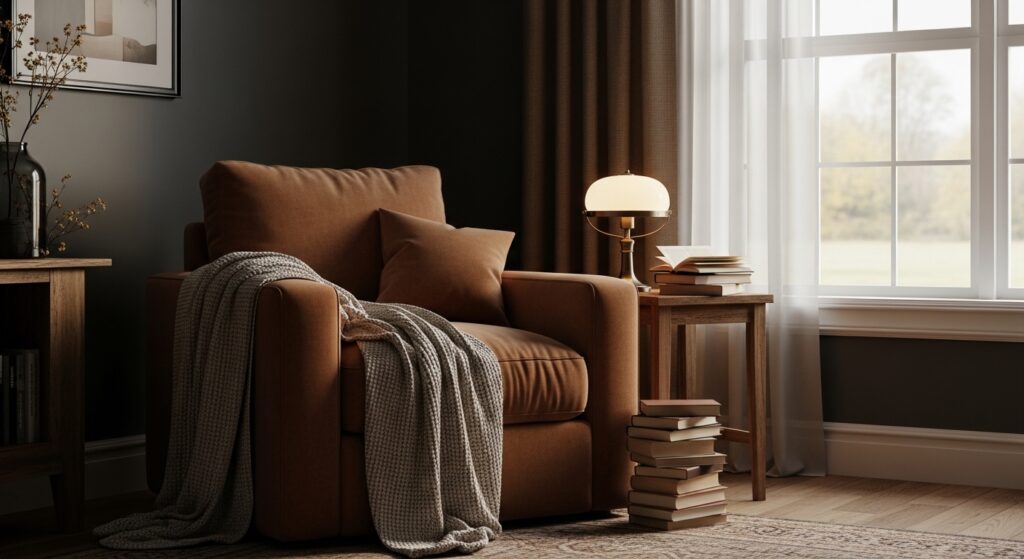
Even within your moody living room, create dedicated cozy micro-zones for specific activities and purposes. Position an oversized armchair near a window with a soft throw blanket draped over the arm. Add a small side table with a reading lamp and space for books and tea. This reading nook becomes your personal retreat within the larger room. The layered coziness creates that nested feeling of safety and comfort.
These intentional nooks make your living room more functional and encourage actually using the space rather than just admiring it. The dedicated purpose—reading, meditation, coffee-drinking—makes these spots feel special and valued. Even small living rooms can include a cozy corner by a window or in an alcove. The nook demonstrates that taking time for yourself is important and worthy of dedicated space. This concept of sanctuary-within-sanctuary amplifies the cozy factor and makes moody rooms feel thoughtfully designed for genuine living.
15. Balance Dark with Strategic Light Elements
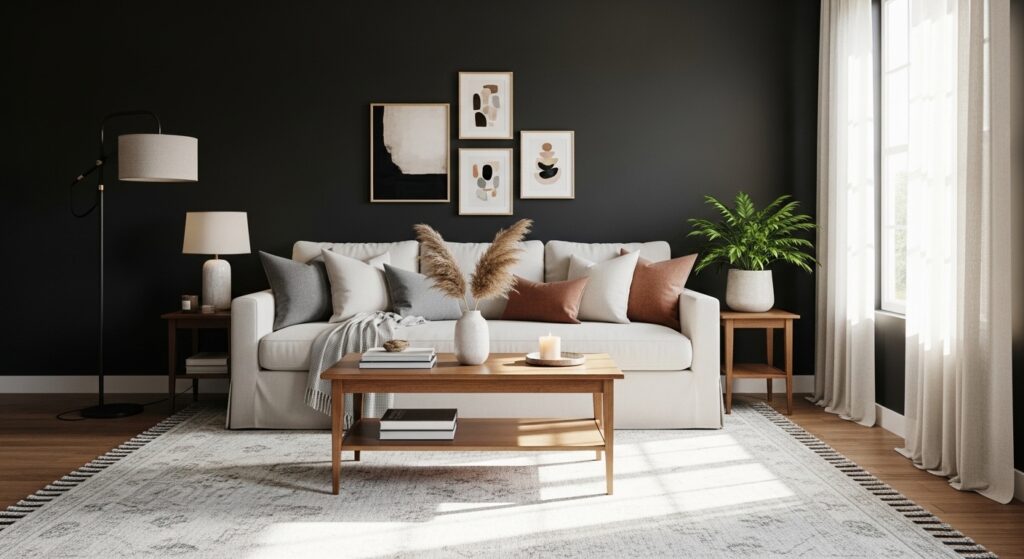
While embracing moody darkness, strategic light elements prevent spaces from feeling oppressive or overwhelming to inhabitants. Balance dark walls with a cream or warm beige sofa that provides visual relief and contrast. Add a warm wood coffee table rather than black lacquer for organic lightness. Include cream or ivory throw blankets and pillows that create breathing room within the dark scheme.
The light elements make the space feel intentionally designed rather than accidentally too dark or poorly executed. These lighter touches create visual resting points where your eye can relax between dark surfaces. The balance ensures your room feels cozy rather than cave-like in a negative way. Aim for approximately 60-70% dark tones with 30-40% lighter warm neutrals for optimal moody-cozy balance. This thoughtful balance demonstrates sophisticated design thinking and creates spaces that are livable long-term rather than initially impressive but ultimately uncomfortable.
16. Layer Patterns Thoughtfully
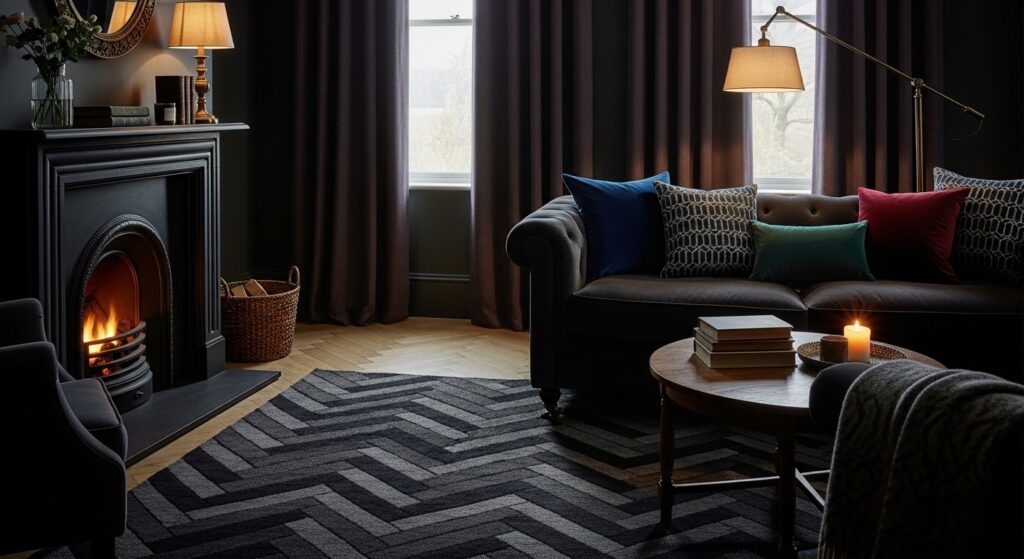
Patterns add visual interest and prevent moody spaces from feeling flat despite limited color variation. Mix subtle patterns within your dark palette—a herringbone or chevron rug in dark tones adds movement underfoot. Geometric throw pillows in dark charcoal and black create dimension without introducing bright colors. Damask or subtle floral curtains add texture and pattern while maintaining the moody atmosphere.
The key is varying pattern scales—combine large, medium, and small patterns rather than similar-sized prints. Keep patterns within your established color palette to maintain cohesion and avoid visual chaos. Dark-on-dark patterns create sophisticated interest that reveals itself gradually rather than shouting immediately. The varied patterns create visual richness that makes moody rooms feel layered and considered. This approach proves that limited color doesn’t mean limited visual interest when patterns are thoughtfully incorporated throughout the space.
17. Include a Fireplace or Alternative
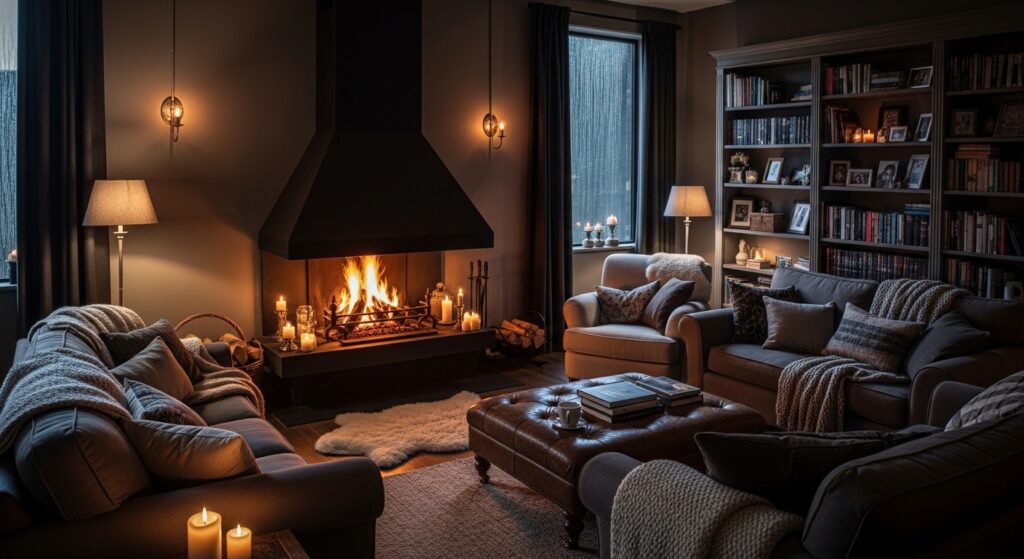
A fireplace represents the ultimate cozy element and natural focal point for moody living rooms. Arrange seating to face the fireplace, creating an intimate gathering area around warmth and flickering light. The dancing flames provide mesmerizing visual interest and literal warmth during cold months. Even non-working fireplaces filled with candles create similar focal point and cozy atmosphere.
If you don’t have a fireplace, high-quality electric alternatives provide realistic flame effects without requiring venting or major installation. The fireplace becomes more than heating—it’s the heart of your moody living room and natural gathering spot. The warm glow complements candlelight and creates that essential layered lighting effect. A mantel provides attractive display space for candles, plants, and meaningful objects. This central element transforms your moody living room into the ultimate cozy sanctuary where people naturally want to gather.
18. Add Vintage or Antique Elements
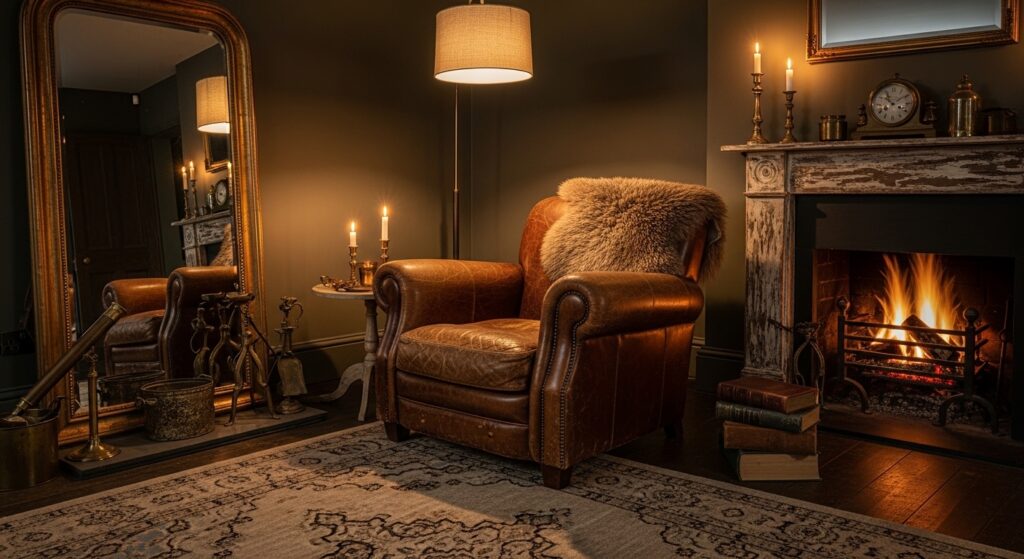
Vintage and antique pieces add history, patina, and soul that new furniture simply cannot replicate in moody spaces. Incorporate a vintage leather chair that’s developed beautiful character and softness over decades. Hang an antique mirror with worn gilding that reflects light while adding history. Display aged brass candlesticks, vintage books, and collected treasures throughout your space.
These pieces with previous lives prevent moody rooms from feeling too new, perfect, or staged. The worn patina adds warmth and authenticity that mass-produced items lack completely. Vintage finds often feature superior craftsmanship and unique details unavailable in modern furniture. Flea markets, estate sales, and antique shops offer treasures at various price points. The mixed eras create that essential collected-over-time appearance that makes spaces feel genuinely lived-in. These meaningful additions prove that the coziest moody rooms have layers of history and personality.
19. Incorporate Scent Strategically
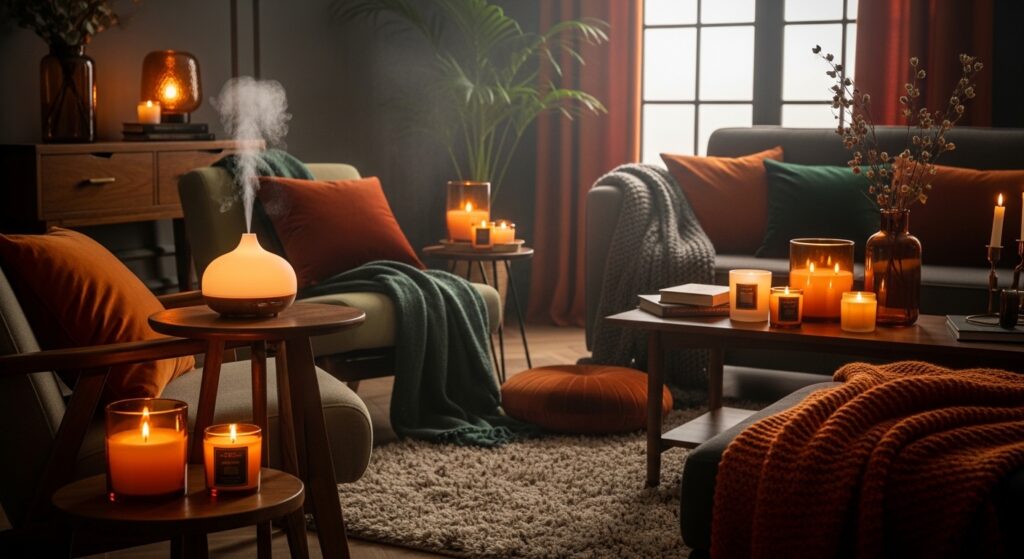
Scent powerfully affects atmosphere and creates invisible layers of coziness often overlooked in design. Use an essential oil diffuser with warm, cozy scents like vanilla, sandalwood, cedarwood, or cinnamon. Light naturally scented candles that add both visual warmth and pleasant aroma throughout the space. Choose warm, woody, or spicy scents rather than bright florals or citrus for moody atmospheres.
The right scent creates emotional comfort and signals your body to relax completely. Scent memory is powerful—choose fragrances that become associated with your cozy moody sanctuary. Avoid overpowering synthetic fragrances that can trigger headaches or feel cloying over time. Layer subtle, complementary scents rather than competing strong fragrances that clash. This invisible sensory element completes the cozy moody experience by engaging another sense beyond sight, sound, and touch.
20. Maintain Comfortable Temperature
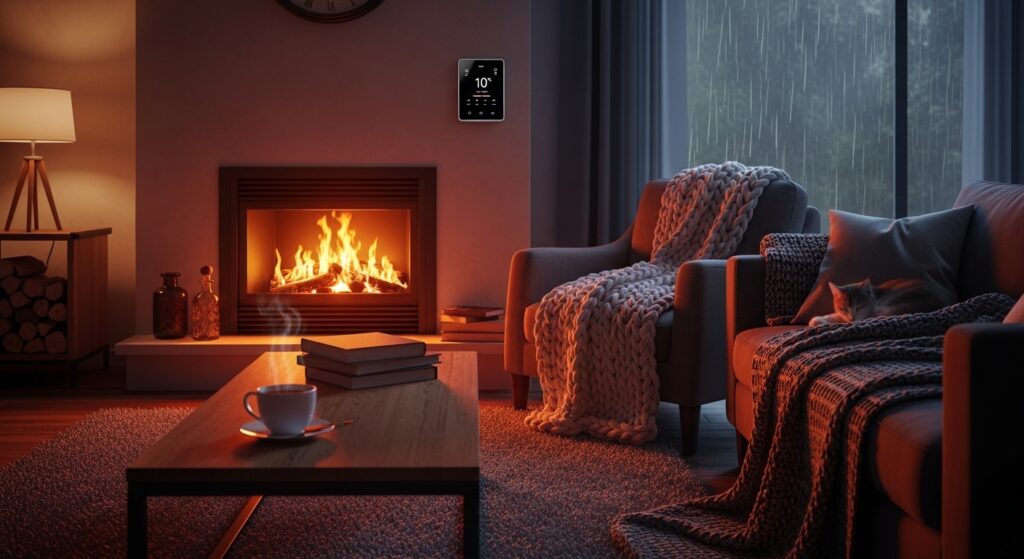
Physical temperature dramatically affects how cozy your moody living room actually feels regardless of aesthetics. Maintain comfortable warmth—around 68-72°F (20-22°C)—especially during evenings when you’re using the space. Address drafts around windows and doors that create cold spots disrupting comfort. Keep soft blankets easily accessible throughout the room for individual temperature control and added coziness.
A working fireplace or quality space heater provides supplemental warmth and visual comfort simultaneously. Proper insulation and weather stripping make rooms more comfortable while reducing energy costs significantly. The physical warmth combines with visual warmth from colors and lighting to create complete coziness. Rugs add insulation underfoot while heavy curtains prevent heat loss through windows. This attention to actual physical comfort ensures your moody living room isn’t just beautiful but genuinely comfortable for spending extended time throughout all seasons.
21. Edit and Declutter Regularly

Even cozy moody rooms benefit from regular editing and decluttering to prevent overwhelming chaos. Keep surfaces mostly clear with only meaningful, beautiful objects displayed intentionally and thoughtfully. Remove items that no longer serve purpose or bring genuine joy to your space. Visual breathing room allows your eye to rest and prevents the space from feeling heavy or oppressive.
Cozy doesn’t mean cluttered—the most successful moody rooms feel layered yet intentional rather than messy. Use attractive baskets and boxes to hide necessary clutter like remotes and charging cables. Regular editing ensures your space remains peaceful and restorative rather than stressful and overwhelming. The restraint allows appreciation of your carefully chosen elements without distraction or competition. This ongoing maintenance demonstrates that sustainable coziness requires curation, not just continuous accumulation of comfortable items.
22. Create Flexible Lighting Scenarios
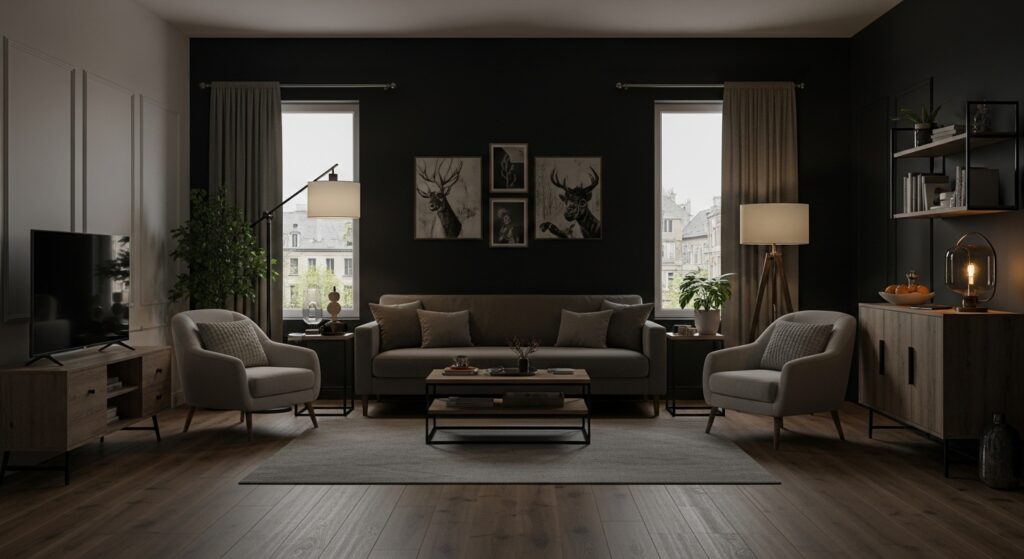
The ability to adjust lighting for different activities and moods separates truly functional moody rooms from merely dark ones. Create bright, warm lighting for reading or detailed tasks using focused lamps. Dim overhead fixtures and rely on accent lighting for movie watching. Use only candles and minimal lamps for intimate conversations or quiet evenings alone.
Install multiple switches and dimmers that allow quick lighting adjustments without getting up repeatedly. Program smart bulbs or switches with preset scenes for different activities and times of day. The flexibility ensures your moody living room works for all activities rather than being limited. Proper task lighting prevents eye strain while ambient options create atmosphere and mood. This thoughtful lighting control demonstrates that moody rooms can be supremely functional and adaptable rather than one-note spaces that only work in specific conditions.
Conclusion
Mastering cozy moody living room vibes requires balancing seemingly contradictory elements—darkness with warmth, drama with comfort, sophistication with livability. The key lies in thoughtful layering: multiple light sources creating pools of warm glow, abundant soft textures inviting touch, warm wood tones preventing coldness, and personal meaningful objects adding soul. When these elements work together harmoniously, you create spaces that feel like warm, protective caves rather than cold, dark dungeons.
Start with your foundation colors and lighting, then gradually layer in textures, personal touches, and the finishing details that make spaces uniquely yours. Don’t rush the process—truly cozy moody rooms develop over time as you discover what works in your specific space with your actual lifestyle. Trust your instincts about what feels genuinely comfortable versus what simply looks good in photos. Remember that the ultimate measure of success is how the room makes you feel when you’re actually living in it daily. With these comprehensive strategies, you’re equipped to create a living room that’s dramatically beautiful, supremely comfortable, and perfectly suited to your desire for intimate, atmospheric, genuinely cozy living.